


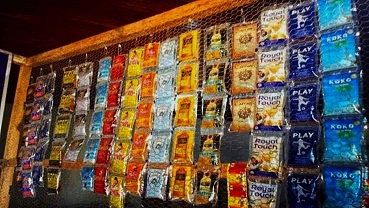

The Manufacturers Association of Nigeria (MAN) has warned that the planned ban by the National Agency for Food and Drug Administration and Control (NAFDAC) on the production and sale of alcoholic beverages in sachets and small PET bottles could result in the loss of over N1.9 trillion in investments and jeopardise over five million direct and indirect jobs across the country.

The Association described the move as economically dangerous and procedurally flawed, urging the Senate and NAFDAC to suspend implementation and instead adopt the already validated National Alcohol Policy.
NAFDAC’s directive, which followed a Senate resolution on November 6, 2025, mandates a complete phase-out of alcoholic beverages packaged in sachets and small bottles by December 31, 2025.

However, MAN’s Director General, Segun Ajayi-Kadir, said the directive contradicts ongoing policy engagements and “disregards the consensus already reached by all stakeholders, including NAFDAC itself, during the validation of the National Alcohol Policy in October 2025.”
Ajayi-Kadir, in a statement issued on Wednesday, argued that the Senate’s decision was taken without proper consultation and was “completely at variance with the subsisting position of the House of Representatives” on the matter.

He added that stakeholders had expected a one-year extension from the Federal Ministry of Health to allow for full policy implementation, not an outright ban.
The MAN chief explained that during the October policy validation meeting, stakeholders, including government agencies, manufacturers, and public health representatives, agreed on a multi-sectoral action plan to address concerns about alcohol abuse without destroying legitimate businesses.
According to him, key components of the plan include stricter enforcement and compliance by regulatory and law enforcement agencies, licensing of liquor outlets across local government areas, continuous public enlightenment and monitoring to discourage underage drinking, and eucational campaigns in schools on the dangers of alcohol abuse.
Ajayi-Kadir said the Senate should have adopted these recommendations rather than pursuing a blanket prohibition, which he described as “unfair and counterproductive.”
MAN warned that the ban, if implemented, could reverse gains in Nigeria’s manufacturing sector and trigger widespread economic disruption.
“This pronouncement, which we believe is counterproductive and forebodes economic dislocation of significant proportions for the nation at this period, will have serious consequences for the now stabilizing economy for the following reasons: loss of over N1.9 trillion investment, largely by the indigenous Nigerian companies; consequential mass retrenchment of over 500,000 direct employees and approximately five million indirect through contracts, marketing and other logistics; reduction in capacity utilisation in manufacturing, which in recent quarters begun to gradually improve on account of the industry’s contribution as a component of food and beverages sector; and loss of indigenous businesses that may gradually obliterate local entrepreneurship development in the economy,” MAN stated.
The MAN President also pointed out that sachet packaging had been an innovation to serve low-income adult consumers who prefer affordable portions, arguing that smaller packaging can actually discourage excessive consumption.
MAN further warned that the ban could create an unintended market for unregulated and illicit alcoholic products, undermining consumer safety.
“The alcoholic beverages produced by local manufacturers are certified by NAFDAC and meet quality standards,” Ajayi-Kadir said.
“If you ban them outright, consumers will turn to unregistered and unsafe alternatives that operate outside regulatory control,” he added.
The Association also cautioned that eliminating local producers would open the market to foreign and smuggled brands, costing government valuable tax revenue and worsening Nigeria’s trade deficit.
MAN urged the Senate to rescind its order and called on NAFDAC to refrain from implementing the ban by the December 31 deadline.
Instead, it called for an expedited endorsement and implementation of the validated National Alcohol Policy, which prioritises regulation, education, and enforcement over prohibition.
Ajayi-Kadir reiterated MAN’s commitment to responsible production and marketing practices, noting that the industry had already invested over N1 billion in nationwide campaigns promoting responsible drinking and prevention of underage consumption.
NAFDAC had announced plans to ban the production and sale of alcoholic beverages packaged in sachets and small bottles below 200 millilitres, effective December 2025.
NAFDAC Director General, Professor Mojisola Adeyeye, disclosed this during a press briefing in Abuja, where she emphasized that the directive was part of the agency’s efforts to address growing public health concerns.
According to Adeyeye, the proliferation of high-alcohol-content beverages in sachets and small containers has made such products easily accessible, affordable, and concealable, leading to widespread misuse and addiction among minors and commercial drivers.


