


The Federal Government has commenced a six-week review of the new tax laws following concerns from businesses and other stakeholders over implementation gaps, conflicting interpretations and unintended consequences of some provisions.

The review, which is expected to feed into the proposed Finance Bill 2027, will examine contentious areas including Value Added Tax thresholds, withholding tax, capital gains treatment and multiple taxation.
It will also consider concerns over taxpayer rights, tax refunds, compliance costs, digitalisation and coordination among the various revenue authorities.

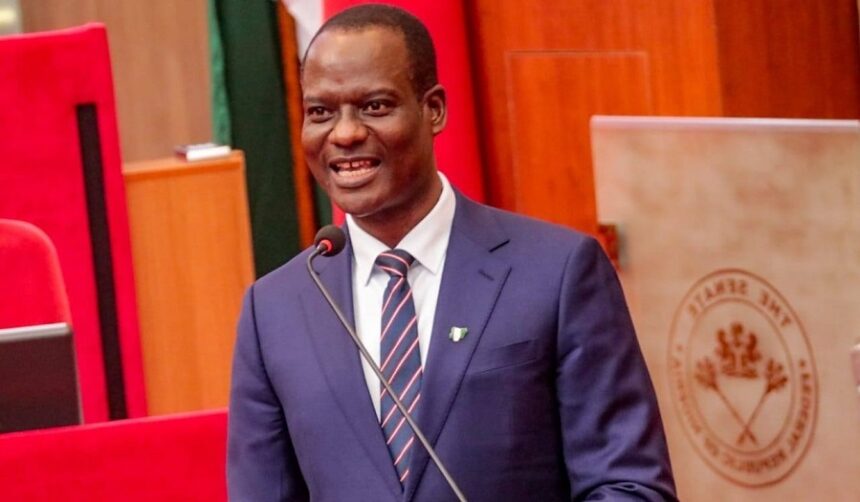
Inaugurating the Technical Subcommittee on Fiscal Policy and Tax Reforms in Abuja on Thursday, the Minister of Finance and Coordinating Minister of the Economy, Taiwo Oyedele, acknowledged that the implementation of the laws had exposed areas requiring clarification, refinement and possible further reform.
Oyedele said the government was moving from the fundamental restructuring undertaken through the 2025 tax reforms to a phase of continuous improvement.

“The real test begins when the law meets the economy, as businesses interpret it, administrators implement it, investors respond to it, and citizens experience it,” he said.
“Implementation inevitably reveals areas requiring clarification, refinement or further reform.”
The development comes against the backdrop of mounting concerns from organised private sector groups over the interpretation and administration of some provisions of the new tax regime.
The controversy has been particularly pronounced over Companies Income Tax and withholding tax, with business groups alleging that conflicting interpretations have created uncertainty for companies attempting to comply with their tax obligations.
In June, the Manufacturers Association of Nigeria, Nigerian Association of Small and Medium Enterprises, Nigerian Association of Small Scale Industrialists, Nigerian Association of Chambers of Commerce, Industry, Mines and Agriculture and Nigeria Employers’ Consultative Association jointly wrote an open letter to President Bola Tinubu over the implementation of the laws.
The groups said the uncertainty had effectively paralysed corporate tax filings in some instances.
They stressed that their objection was not to tax reform or legitimate revenue mobilisation, but to what they described as an implementation approach that undermined the legal framework and objectives of the reforms.
“This Open Letter is not an attack on tax reform or lawful revenue mobilisation,” the groups said.
They added that businesses needed “a clear, lawful and functional framework” through which they could file accurate returns, pay taxes due, protect jobs and continue investing.
Dispute over 2026 tax filings
A major point of contention is the treatment of tax obligations arising from accounting periods that ended before January 1, 2026, when the new tax regime took effect.
The private sector groups argued that the General Transition Guidelines issued by the Minister of Finance provided for a prospective application of the new tax laws.
According to the groups, the guidelines stipulate that tax obligations arising from accounting periods ending before January 1, 2026, should continue to be governed by the repealed tax laws, even where the filing or payment deadlines fall in 2026.
The guidelines also state that no tax, penalty, surcharge, interest, filing obligation or administrative requirement created under the new laws should apply to periods preceding their commencement.
They further provide that Companies Income Tax relating to a basis period ending before January 1, 2026, should be determined under the repealed Companies Income Tax Act, notwithstanding that filing and payment could fall due after the new laws commenced.
However, the OPS alleged that the Nigeria Revenue Service adopted a different interpretation.
The dispute intensified following a June 23, 2026 notice issued by the NRS Emerging Taxpayers Office in Abuja directing companies yet to file their Companies Income Tax returns for the 2026 Year of Assessment to do so under the new Nigeria Tax Act and Nigeria Tax Administration Act.
The NRS maintained that it had no statutory authority to process the returns under the repealed Companies Income Tax Act.
“The applicable law for filing is determined by statute and not by taxpayer election, publication, administrative discretion, advisory, or any other communication suggesting an alternative filing basis,” the Service stated.
“The Service has no statutory authority to process Companies Income Tax returns for the 2026 Year of Assessment under the repealed Companies Income Tax Act or any other repealed tax legislation.”
The disagreement has highlighted one of the central challenges facing the government’s tax reform programme: ensuring that businesses, taxpayers and tax administrators operate from a common interpretation of the law.
Four laws take effect
The tax reforms followed President Tinubu’s signing last year of four major tax bills passed by the National Assembly.
The Nigeria Tax Act seeks to consolidate and harmonise Nigeria’s fragmented tax laws, while the Nigeria Tax Administration Act establishes a common framework for tax administration across the federal, state and local governments.
The Nigeria Revenue Service (Establishment) Act repealed the Federal Inland Revenue Service Act and established the Nigeria Revenue Service as the country’s national revenue agency.
The Joint Revenue Board (Establishment) Act provides an institutional framework for cooperation and coordination among revenue authorities.
The four laws took full effect on January 1, 2026.
Oyedele said the review would not seek to dismantle the reforms but would identify areas where implementation had exposed weaknesses or unintended effects.
“The Finance Bill 2027 should not be seen as just another annual legislative exercise. Our task is not to rewrite the 2025 reforms, but to preserve their fundamental principles while learning from implementation and responding to new economic realities,” he said.
The minister said the review must determine where the laws had created ambiguity, where unintended consequences had emerged, where compliance could be simplified and where the tax system could better support investment and competitiveness.
He warned that raising government revenue could come at a broader economic cost if tax provisions imposed excessive burdens on businesses and households.
“A provision that raises revenue may impose a far greater cost on the wider economy. The government must optimise the whole economy, not merely achieve a single objective,” Oyedele said.
VAT, withholding tax, multiple taxation under review
Preliminary submissions from stakeholders have called for the clarification and simplification of VAT thresholds, withholding tax and capital gains provisions.
Businesses have also demanded stronger measures against multiple taxation and better coordination among federal, state and local revenue authorities.
Another concern is the repeated demand on taxpayers for information already held by government agencies.
Stakeholders therefore proposed greater digitalisation and data sharing among revenue authorities to reduce duplication and lower compliance costs.
Other proposals include stronger taxpayer protections, faster tax refunds and safeguards for small businesses.
The review will also examine measures capable of improving investment and competitiveness in sectors including mining, renewable energy, healthcare and capital markets.
Oyedele directed the committee to assess the economic consequences of proposed changes, particularly their effects on low-income households, workers and businesses.
“Every tax reform produces winners and losers; the question is whether a policy is fair, efficient and competitive, not whether it is popular with everyone,” he said.
The subcommittee will also review the Deduction of Tax at Source Regulations 2024 and prepare revised withholding tax regulations.
It is expected to review the Companies Income Tax (Significant Economic Presence) Order 2020 and develop an updated framework consistent with the new tax laws and international practices.
Broad representation
The Permanent Secretary of the Federal Ministry of Finance chairs the subcommittee, while the Chairman of the Tax Advisory Committee, Albert Folorunsho, serves as co-chair.
Members include representatives of the Federal Ministry of Justice, Nigeria Revenue Service, Joint Revenue Board, Nigeria Customs Service, Central Bank of Nigeria, Debt Management Office, Budget Office of the Federation and Nigerian Investment Promotion Commission.
Representatives of SMEDAN, Manufacturers Association of Nigeria, Nigerian Economic Summit Group, Nigerian Bar Association, Association of National Accountants of Nigeria, Chartered Institute of Taxation of Nigeria and Institute of Chartered Accountants of Nigeria are also on the committee.
NACCIMA and representatives of the Big Four accounting firms — Deloitte, EY, KPMG and PwC — are equally represented.
The government said the committee’s recommendations would provide the basis for further legislative and administrative adjustments under the Finance Bill 2027.
Folorunsho said the committee would seek recommendations capable of responding to the needs of taxpayers, businesses and government.