

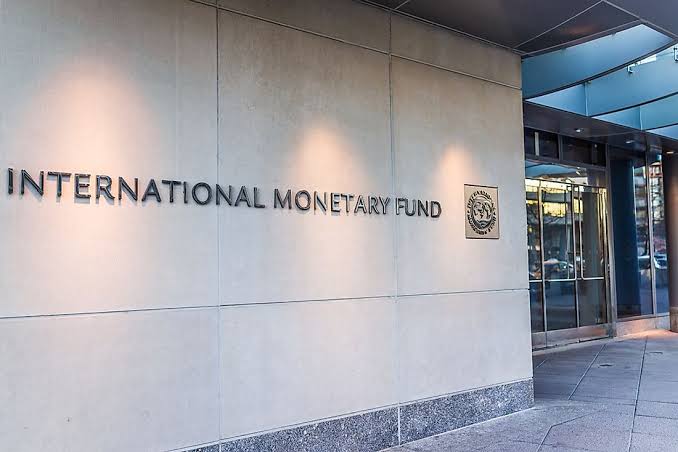

The International Monetary Fund (IMF) has downgraded Nigeria’s growth prospects for 2024 to 2.9% from 3.3% while raising growth expectations to 3.2%, reflecting concerns over Nigeria’s ongoing macroeconomic challenges, particularly the effects of recent flooding and oil production setbacks.

The fund, in its recently published World Economic Outlook (WEO), projected global economic growth in 2025 to remain unchanged at 3.2%.
The projection for the global economy represents a decline of 0.1% from the fund’s earlier projection in July 2024.

For Nigeria, the IMF’s recent GDP growth projection for 2025 represents a 0.2% increase from its earlier projection in July this year.
According to the fund, GDP growth in 2024 will stay at 2.9% – a downgrade compared to its projection in July of this year.

On inflation, the Washington-based institution projected Nigeria’s inflation to steady at 25% in 2025 and 14% by 2029.
Nigeria’s economy in the first and second quarter of the year grew by 2.98% and 3.19% respectively amid a surge in inflation and further depreciation of the naira.
The GDP growth rate in the first two quarters of 2024 surpassed the figure for 2023, representing resilience despite severe macroeconomic shocks with a spike in petrol prices and a 28-year high inflation rate.
Nigeria’s inflation rate only began to slow down in July 2024 after 19 months of consistent increase dating back to January 2023.
However, after two months of slowdown hiatus, inflation continued to rise on the back of an increase in petrol prices by the NNPCL in September.
Speaking on the report, the IMF attributed its downward revision to two major factors, agricultural disruptions caused by severe flooding and security and maintenance issues hampering oil production.
These challenges, according to division chief in the IMF’s Research Department, Jean-Marc Natal, were key drivers of the revision.
Natal said: “There has been, over the last year and a half, some progress in the region. You saw, inflation stabilising in some countries, going down even and reaching a level close to the target. So, half of them are still at a large distance from the target, and a third of them are still having double-digit inflation.
“In terms of growth, it’s quite uneven, but it remains too low. The other issue is that in the region it is still high. It has stopped increasing, and in some countries already starting to consolidate, but it’s still too high, and the debt service is, correspondingly, still high in the region.”
In a separate briefing to release the Global Financial Stability Report, Assistant Director, Monetary and Capital Markets Departments, Jason Wu, noted that Nigeria’s economy is on a path to stability as a result of the reforms taken by the government.
Meanwhile, the Minister of Finance and Coordinating Minister of the Economy, Wale Edun, has called for bigger concessional funding from developed countries and multilateral financial institutions to deal with the cost-of-living crises occasioned by fundamental reforms.
The minister spoke at a press briefing by Leaders of the Inter-Governmental Group of 24 (G-24) nations at the International Monetary Fund (IMF)/World Bank 2024 Annual Meeting in Washington DC, United States, yesterday.
Speaking on the dropping interest rate in developed countries and the implications for Nigeria and other developing countries, Edun said: “What the developing world continues to call for is a larger sum that can really make a difference, not just to help a country cope with its immediate payment needs but to have funds to grow the economy.
“That is what the fight against inflation translates to for developing countries.
“I must note here that the IMF has reduced the charges to a 30-36% reduction in rates and the excess charges is significant, and it is in the right direction to help developing countries get the resources they need to develop and grow.”
He said the benefits of reforms are over the longer term, and the costs are front-loaded.