

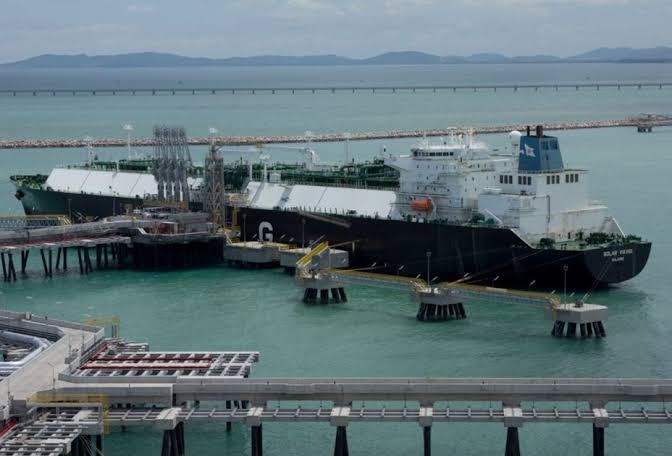

Nigeria’s petrol imports surged in 2024, doubling despite an increase in domestic refining capacity, highlighting the country’s continued reliance on imported fuel, according to official data.

The latest data from the foreign trade statistics report of the National Bureau of Statistics showed that the cost of petrol imports rose by 105.3 per cent to N15.42tn in 2024 from the N7.51tn recorded in 2023.
This sharp increase in fuel import expenditure came at a time when expectations were high for a decline in reliance on foreign supply following significant investments in local refining.

The commencement of operations at the 650,000-barrel-per-day capacity Dangote Petroleum Refinery last year and ongoing revival efforts at the other local refineries were expected to reduce import dependence.
However, existing data suggests that these refineries have yet to reach full production capacity to meet domestic demand.

Over the past five years, Nigeria’s petrol import bill has steadily risen. In 2020, the country spent N2.01tn on fuel imports, more than doubling to N4.56tn in 2021.
By 2022, the figure further increased to N7.71tn before slightly declining to N7.51tn in 2023. However, in 2024, fuel import expenditure surged to an all-time high of N15.42tn, marking the largest petrol import bill in Nigeria’s history.
The PUNCH had earlier reported that despite the commencement of petrol production by three major refineries in Nigeria, oil marketers had continued to import and distribute the product nationwide.
Marketers imported 2.3 billion litres of petrol between September 11 and December 5, 2024. The continued importation of petrol is contrary to a public announcement by some group of marketers who earlier stated their intention to halt petrol imports and focus on domestic supply.
The local refineries are the 650,000 barrel per day capacity Dangote Petroleum Refinery located in Lagos and the 210,000bpd capacity Port Harcourt Refining Company in Rivers State. PHRC currently produces from its old plant with a capacity of 60,000bpd.
Also, the Warri Refining and Petrochemical Company commenced operations in December 2024. PHRC and WRPC are both under the management of the Nigerian National Petroleum Company Limited.
The PUNCH also reported that despite improved domestic refining capacity in Nigeria, major oil marketers have continued to import refined petroleum products, as they imported 6.38 billion litres of Premium Motor Spirit (petrol) and Automotive Gas Oil (diesel) in the past five months.
But independent marketers and retailers, through their various associations, kicked against the development, as the importation of these commodities gulped about N6tn, a development that further piled pressure on the country’s forex.
The Executive Secretary of the Major Energies Marketers Association of Nigeria, Clement Isong, earlier said that importation promotes competition, helping drive down the price of PMS.
Commenting on fuel importation, he explained, “What importation does for us is that it contributes to the market’s competitiveness. The price movements you are enjoying and the market competition are the result of importation. Importation is useful.
“We want local refining. Let’s be clear. We want local refining. What ensures that we have the most competitive price is that locally refined fuel prices have to compete with imported prices. That is what keeps our prices at the pump as low as possible,” the MEMAN leader asserted.