
The Federal Government has refuted claims of hidden spending in federation revenues as alleged in interpretations of a recent World Bank report.

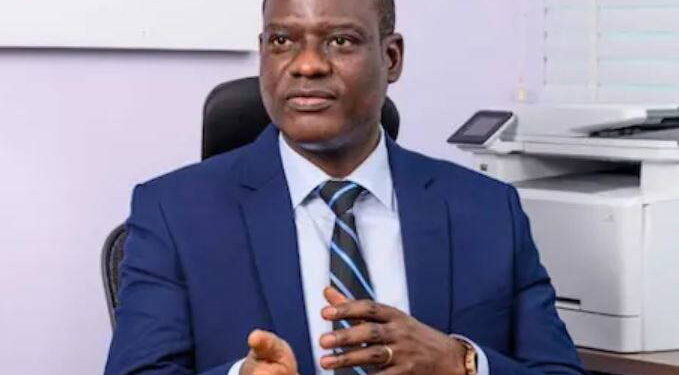
The clarification was contained in a statement issued on Sunday by the Federal Ministry of Finance and signed by the Minister of State for Finance, Taiwo Oyedele.
The ministry explained that the claims stem from a misinterpretation of the World Bank’s Nigeria Development Update, particularly regarding Federation Account Allocation Committee (FAAC) deductions and fiscal flows, which it said are legitimate and transparent.

The Federal Ministry of Finance stated that recent media reports had wrongly framed FAAC deductions as “hidden spending” or “missing funds,” emphasizing that these deductions are part of Nigeria’s established fiscal framework.
It stressed that all such deductions are properly documented within the federation account system and do not represent diversion of funds.

“The attention of the Federal Ministry of Finance has been drawn to recent media reports and commentaries that misrepresent the findings of the latest Nigeria Development Update by the World Bank, particularly claims suggesting that a significant portion of federation earnings is being ‘diverted’ or constitutes ‘hidden spending’.”
“These interpretations misrepresent the World Bank’s analysis and reflect a misunderstanding of the fiscal system.”
The ministry further explained that FAAC deductions cover statutory transfers, savings, security expenditures, cost-of-collection charges, and refunds to government agencies, all of which are legitimate fiscal obligations.
The ministry rejected suggestions of large-scale revenue diversion, noting that such claims ignore the broader context of fiscal reforms highlighted in the World Bank report. It pointed to ongoing policy measures aimed at improving transparency and increasing government revenues.
The government referenced an Executive Order designed to strengthen petroleum revenue remittances.
It noted that these reforms are already improving transparency in public finance management.
The ministry added that the measures are expected to boost distributable revenues to all tiers of government.
It also highlighted that the World Bank report presented a generally positive outlook for Nigeria’s economy, including broader-based growth, easing inflation, stronger external reserves, and improved debt indicators. The ministry concluded that reforms are yielding results and should be sustained.
Although the Federal Government did not directly mention Peter Obi, the clarification appears linked to his recent comments criticizing Nigeria’s revenue management.
Obi had cited a World Bank report to argue that a significant portion of federation revenue did not reach the Federation Account.
Obi claimed that out of N84 trillion generated over three years, about 41%—or N34.44 trillion—was not remitted.
He described the situation as “institutionalised corruption” and pointed to systemic deductions.
He argued that such financial practices limit Nigeria’s ability to invest in critical sectors like health, education, and infrastructure.
He further warned that these issues contribute to Nigeria’s poor development outcomes despite higher revenue generation.
Peter Obi has in recent months consistently questioned the fiscal decisions of the current administration, particularly regarding transparency and public spending. His criticisms have often focused on large financial approvals and debt settlements.
Earlier in April, Obi challenged the approval of N3.3 trillion to settle debts in Nigeria’s power sector.
He argued that similar approvals had been made multiple times without clear execution outcomes.
Previous reports indicated plans to clear N6.8 trillion owed to power generation companies and a N4 trillion bond framework introduced in October 2025.
These recurring concerns have kept public attention on fiscal accountability, even as the government insists that its financial practices are transparent and aligned with ongoing reforms.