

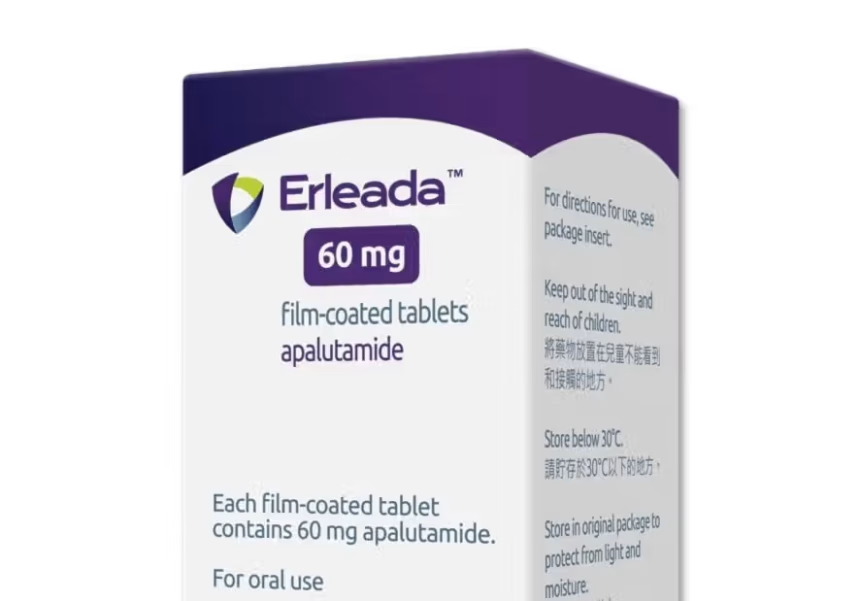

Erleada, a prescription medicine, when used with hormone-blocking therapy six months before and after prostate surgery improved the chances of eliminating the cancer and reduced the risk of disease progression or death, according to data from a late-stage trial.

The drug, produced by Johnson & Johnson, is used in the treatment of prostate cancer.
Prostate cancer is a type of cancer that develops in the prostate, a small gland located below the bladder and in front of the rectum in males.

Data from the drug trial were presented at the American Society of Clinical Oncology meeting in Chicago on Sunday, Reuters reported.
According to the study, which monitored patients for more than five years, those given the regimen were nine times more likely to show little or no detectable cancer in the prostate at the time of surgery than those who received testosterone-blocking therapy alone.

The study also found that patients who received the “combination therapy on average went more than six years before requiring subsequent treatment, nearly double the time for the hormone therapy alone group”.
Johnson & Johnson said Erleada also reduced the risk of the cancer spreading or death by 20 percent.
The company said half of patients who undergo the current standard prostate-removal surgery and radiation experience cancer recurrence and require additional treatment.
The extended Erleada regimen was said to reduce the combined risk of cancer recurrence and death by 29 percent compared with hormone therapy alone.
The trial enrolled more than 2,000 patients with “high-risk localised or locally advanced prostate cancer who were candidates for prostate gland removal surgery”.
According to Reuters, at the time of surgery, 8.9 percent of patients who received the combination therapy had little to no detectable cancer, compared with one percent of those receiving hormone therapy alone.
Mark Wildgust, the company’s medical affairs lead for oncology, said evidence shows that “Erleada is adding something that we had not seen before”.