

By Ayo Olesin

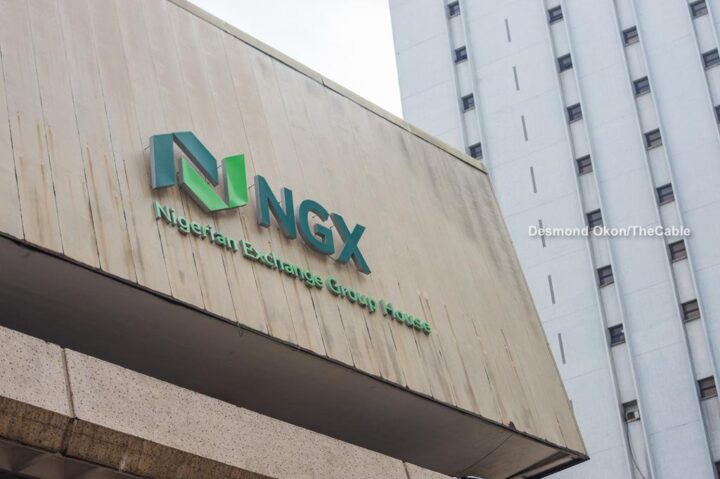
Nigeria’s record-breaking equities rally is set to enter a more volatile but fundamentally driven phase, with investors expected to rotate portfolios ahead of the anticipated Dangote Refinery initial public offering (IPO), according to the latest Financial Derivatives Company (FDC) economic outlook.
In the August economic outlook, presented by FDC Managing Director, Bismarck Rewane, at the Lagos Business School Breakfast Session, the report said the Nigerian Exchange had emerged as the world’s best-performing stock market in 2026 in dollar terms after recovering strongly from its June correction.

The report attributed the market’s resilience to improved foreign exchange management, increased retail participation, pension fund reforms, the adoption of a T+1 settlement cycle and longer trading hours, all of which have improved liquidity and investor confidence.
Despite surrendering about ₦13 trillion during the June correction, the market rebounded sharply, pushing total market capitalisation to ₦159.72 trillion in July, an 8.49 per cent increase from June. FDC projects market capitalisation to rise further to ₦163.54 trillion in August and ₦166.34 trillion in September.

However, Rewane warned that the next leg of the rally would no longer be broad-based.
According to the report, investors are expected to become increasingly selective, favouring companies with robust earnings growth, expanding profit margins, strong cash generation and attractive shareholder returns, particularly across the banking, telecommunications and oil and gas sectors.
A major catalyst expected to redefine the market is the proposed Dangote Refinery IPO.
FDC described the listing as potentially the largest in Africa’s history, estimating that it could expand the NGX’s total market capitalisation by 30 to 40 per cent, while lifting the All-Share Index by between 25 and 30 per cent over time.
The report, however, warned investors to brace for short-term volatility.
It projected that many investors would dispose of existing blue-chip holdings to raise cash for the IPO, triggering temporary weakness in the broader market before the anticipated long-term gains materialise.
“The IPO may trigger rotation into energy stocks from other sectors,” the report noted, adding that the long-term impact would depend on the refinery’s profitability, operational efficiency and dividend policy.
Beyond the refinery listing, FDC identified several structural improvements that have strengthened Nigeria’s capital market, including higher pension fund allocation limits for equities, expanded retail participation and more efficient settlement infrastructure.
Nevertheless, it cautioned that the market remains highly concentrated.
According to the report, just 10 companies account for 72 per cent of the NGX’s total market capitalisation, making the overall index heavily dependent on the performance of a handful of large-cap stocks including Airtel Africa, Dangote Cement, MTN Nigeria, BUA Foods and BUA Cement.
The report also warned against excessive leverage, recalling the painful lessons of the 2008 market collapse when margin lending fuelled an unsustainable asset bubble.
It cautioned that some investors are once again borrowing to purchase equities, warning that unchecked leverage could amplify any future market correction.
External risks also remain.
FDC said a possible US Federal Reserve rate increase before the end of the year could trigger capital outflows from frontier markets, while heightened Middle East tensions and reforms affecting banking holding companies could weigh on valuations.
Despite these risks, the report maintained a positive medium-term outlook, arguing that stronger corporate earnings, improved market infrastructure and the potential landmark refinery listing could deepen Nigeria’s capital market and enhance its attractiveness to both domestic and international investors.