
The Federal Government’s plan to deliver cheaper transportation from October 1 is facing major implementation hurdles as transport operators across several states complain of inadequate Compressed Natural Gas stations, high vehicle conversion costs and prolonged queues at existing refuelling facilities.
While the government says more than 120,000 vehicles have already been converted to CNG, with over 400 certified conversion centres and more than 90 refuelling stations established nationwide, operators say the infrastructure remains insufficient to support mass adoption.
The situation has cast doubt on how quickly the savings from cheaper CNG can translate into lower fares for millions of commuters, particularly in states where commercial vehicles still depend overwhelmingly on petrol.

President Bola Tinubu, after meeting the 36 state governors on August 27, directed states to work with transport unions and commercial operators, support vehicle conversion and fleet deployment, and ensure that savings from cheaper energy are passed on to commuters.
The President also established an implementation committee for the National Affordable CNG Transit Programme under the Nigeria Governors’ Forum, chaired by Kwara State Governor AbdulRahman AbdulRazaq.

But reports from across the country show that the rollout remains uneven, with some states already providing free or heavily subsidised CNG and alternative-energy transport, while others are still struggling to establish basic refuelling and conversion infrastructure.
Lagos: CNG queues persist
In Lagos, one of Nigeria’s busiest commercial transport markets, CNG users continue to experience lengthy queues at some stations.
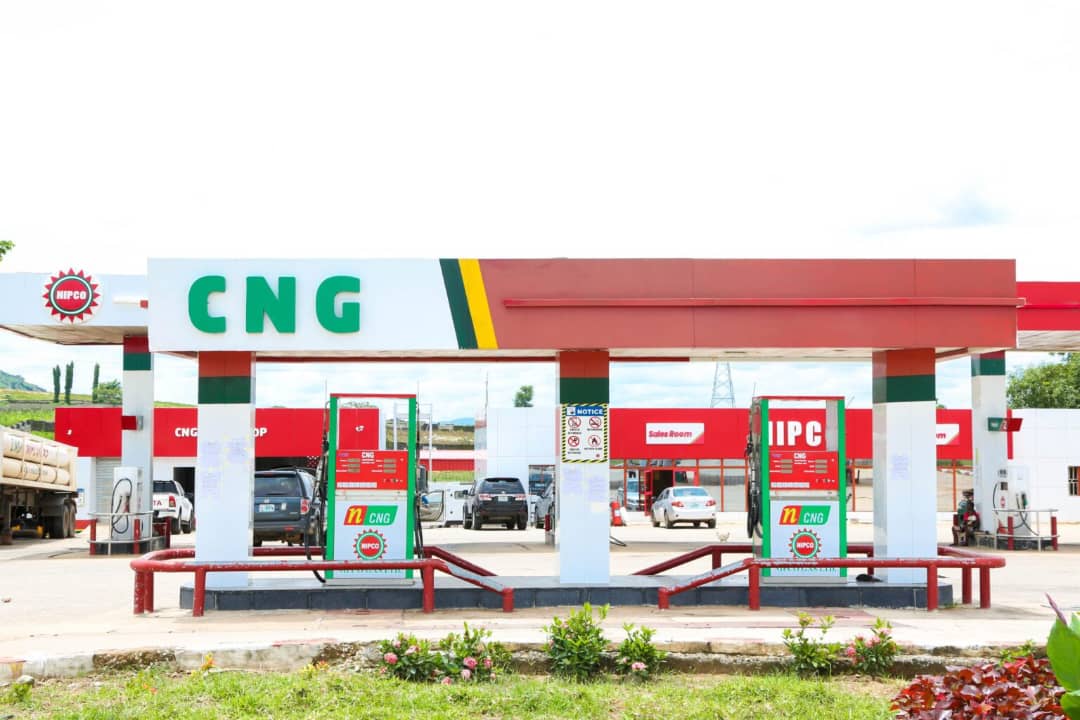
At the NIPCO facility at Ibafo along the Lagos-Ibadan Expressway, buses, cars and trucks have reportedly spent hours waiting to refuel, with queues sometimes extending towards the highway.
A commercial driver, Saheed, said he had spent hours waiting to access the facility.
“We have been here since 7:30 pm. My bus is just getting close to the pump. The reason for this queue is because we have a few CNG stations along this axis,” he said.
He said some operators were reluctant to return to petrol because of its cost, despite the inconvenience associated with CNG refuelling.
Another driver, Musa Kazeem, said the cost of conversion remained a major obstacle.
“I planned to convert my vehicle last month, but they told me to look for N800,000 or N1m, depending on the size of the cylinders I want. Where will I get that?” he asked.
Kazeem also complained that motorists who had converted their vehicles still had to spend hours waiting for gas.
“It now looks as if the CNG stations inherited the petrol queues we used to have before the Dangote refinery became operational,” he said.
Similar complaints have been reported around Mowe and Ibafo, as well as at NNPC Ilasamaja and NIPCO Mobil on Ajegunle Road.
Transporters demand more stations
The National President of the National Association of Road Transport Owners, Yusuf Othman, acknowledged that inadequate refuelling infrastructure was costing operators time and money.
“The queues in CNG stations are really costing us time, because time is money. And this is because of the non-availability of refilling stations,” he said.
According to him, the government’s intervention through the Midstream and Downstream Gas Infrastructure Fund should eventually increase the number of stations and ease congestion.
“There are a lot of CNG stations coming up. The government is intervening through the Midstream and Downstream Gas Infrastructure Fund. That will go a long way in having many stations,” Othman said.
He maintained that CNG remained cheaper than petrol and would ultimately reduce operating costs if the infrastructure expanded sufficiently.
“As it is now, CNG is the way to go. It’s clean energy, and it’s cheaper. The only problem is the queue,” he said.
Plateau: N200 fares but no CNG station
The contrast is particularly striking in Plateau State, where the government operates subsidised mass transit but commercial operators say the CNG programme has yet to produce meaningful benefits.
The Commissioner for Transport, Davou Jatau, said government buses charge only N200 for journeys covering between 18km and 20km within Jos.
He said a journey that could cost between N1,000 and N1,400 in a taxi following the removal of the petrol subsidy could be completed for N200 on the government buses.
But Chairman of NTA Park, Jos, Ibrahim Maikudi, said CNG-powered buses supplied to the state were reportedly affected by the absence of a refuelling station.
“They once approached us, took our plate numbers and everything, but nothing has happened. In Plateau State, for instance, there is no station where you have a CNG vehicle that you go and buy CNG in the Plateau completely,” he said.
Kaduna offers free CNG transport
Kaduna presents a sharply different picture.
The state government said it had operated a free CNG bus service since July 2025 following the inauguration of 100 CNG buses.
The Commissioner for Information and Culture, Ahmad Mayaki, said the buses operate on eight routes covering about 200 bus stops.
He said the service was available to students, civil servants, traders, artisans and other residents, adding that the government had directed that it continue indefinitely.
Gombe: Long-distance transport faces infrastructure gap
In Gombe, transport operators said CNG was suitable for some urban operations but remained problematic for interstate travel because of the shortage of refuelling stations.
One operator said a CNG-powered vehicle travelling to Abuja could face hours of delay while searching for fuel.
“If you want to travel to Abuja and return the following morning, you could spend six, seven or even eight hours in a queue waiting to refuel,” he said.
He said plans were underway to establish about 30 CNG substations across the state.
The Managing Director of Gombe State Transport Service, Sani Sabo, acknowledged that CNG could reduce transportation costs but said infrastructure expansion would take time.
“The policy itself is very good. We have done the analysis, and it can reduce the cost of transportation and fuel. However, it will take time for the infrastructure to cover the necessary locations,” he said.
Northern states lag behind
In Jigawa, transport operators questioned how the Federal Government expected fares to fall without sufficient CNG stations and conversion centres.
An official of the National Association of Transport Owners, Muhd Mudi, said, “Where are the CNG stations in Jigawa? Where do you want us to get gas? This policy cannot work without stations and conversion centres.”
Zamfara faces a similar challenge, with commercial drivers saying the state was yet to have a CNG station.
A driver, Aminu Suleiman, said CNG could ease the pressure created by rising petrol prices but questioned the slow rollout.
“I hope it is not a fake promise because we have been hearing about the CNG but we, the people of Zamfara State, have never seen it,” he said.
The Zamfara State Government said plans were underway to establish facilities in Gusau and other parts of the state.
In Kwara, only about 100 commercial vehicles belonging to transport union members have reportedly been converted.
The state RTEAN chairman, Abdulrasheed Onikijipa, said some operators were reluctant to embrace the technology because of concerns about its effect on their vehicles.
He also complained about inadequate consultation between government and transport unions.
Alternative energy gains ground
Some states are pursuing CNG alongside electric transport.
Borno, for instance, already operates hundreds of government-owned electric vehicles in Maiduguri, with fares reportedly ranging from N50 to N100.
In Benue, the government has commenced an awareness campaign ahead of wider CNG adoption, while the Commissioner for Transport and Energy, Joseph Ter, said he had converted his official vehicle to demonstrate support for the programme.
Nasarawa plans to establish CNG bi-fuel conversion centres across its three senatorial districts and has trained 50 auto technicians.
Edo is preparing to deploy more than 50 52-seater CNG buses in October, according to the state government.
Kano has also announced plans for CNG-powered mass transit while procuring 500 electric tricycles and developing a Rapid Bus Transit programme.
In Rivers, the government plans to return palliative buses to the roads in October, including buses that previously conveyed civil servants and other commuters free of charge.
Conversion cost remains a major barrier
Across the states, however, the same obstacles repeatedly emerge: the cost of converting vehicles, inadequate stations, long queues, maintenance expenses, financing and concerns about the reliability and safety of the technology.
For many commercial drivers, the upfront conversion cost of between N750,000 and N1m represents a substantial investment at a time when operators are already dealing with expensive spare parts, vehicle maintenance, levies and weak passenger purchasing power.
The Federal Government has introduced financing arrangements intended to allow motorists and operators to spread conversion costs rather than pay the entire amount upfront.
It has also continued to invest in CNG infrastructure. In May, Tinubu commissioned four CNG projects supported by the Midstream and Downstream Gas Infrastructure Fund in Lagos, Abuja and Owerri.
Cheaper fuel, but will fares fall?
The government has pointed to several examples where alternative-energy transport has already reduced fares.
According to the State House, Borno’s CNG and electric transport services charge between N50 and N100 on routes where commercial operators charge N300 to N600.
In Oyo, CNG buses reportedly reduced the Lagos-Ibadan fare from about N8,000 to N3,200 when the service commenced, while Adamawa recorded fare reductions of up to 50 per cent. Enugu also reportedly reduced the Enugu-Nsukka fare from N2,500 to N1,500.
But the experience across the states suggests that cheaper fuel alone will not automatically produce cheaper transportation.
Operators must first be able to access the fuel consistently, recover conversion costs and maintain their vehicles at reasonable prices.