

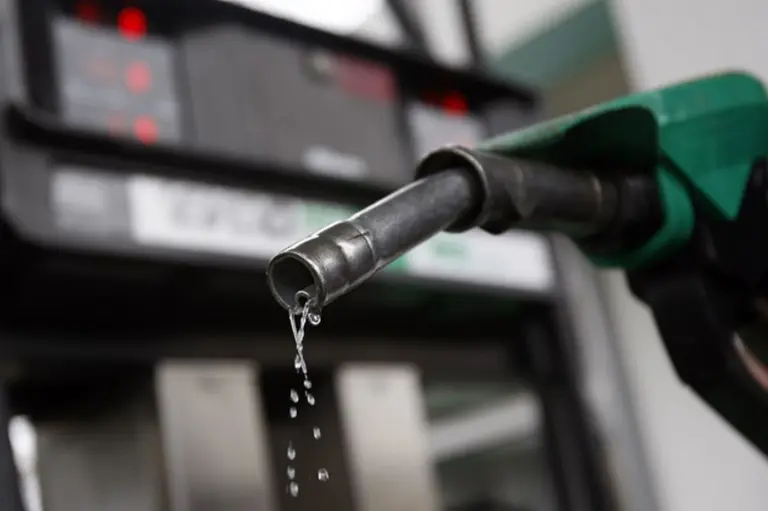

The Federal Government has moved to shield Nigerians from sharp swings in petrol prices, proposing a N1,350-per-litre ceiling on the ex-gantry or landing cost of petrol while offering a 30-day discount on fuel sold through Nigerian National Petroleum Company Limited stations.

The Minister of Finance and Coordinating Minister of the Economy, Taiwo Oyedele, announced the measures on Thursday in Abuja as part of a fresh intervention aimed at containing the impact of rising petrol and transport costs on households and businesses.
Under the proposed price-modulation mechanism, refiners and importers would absorb any cost above the N1,350 ceiling and recover the difference when crude prices or foreign-exchange conditions become more favourable.
Oyedele said the arrangement was designed to smooth price movements rather than prevent them altogether.
“We are introducing price modulation. Pump prices should not have to follow every swing in global crude or the exchange rate,” he said.

He stressed that the arrangement was neither a return to fuel subsidy nor conventional price control.
The minister said the ceiling would be reviewed monthly, with the figures published for transparency.
The proposal does not mean petrol will necessarily sell at N1,350 per litre at filling stations. The ceiling applies to the ex-gantry or landing cost, with distribution, margins, transportation and other components still feeding into the eventual pump price.

The move comes as petrol prices have been rising and varying across the country. NNPC’s latest reported pump prices put petrol at about N1,355 per litre in Lagos and Rivers and N1,370 in Abuja.
30-day NNPC discount
Alongside the proposed ceiling, the government announced a 30-day discount on petrol sold by NNPC, with public transport operators to receive priority.
Oyedele said the government would, under the arrangement, sell the product at cost to cushion the immediate impact on transport operators and commuters.
“We are offering a discount on petrol dispensed by NNPC Limited for the next 30 days in the first instance with priority for public transporters nationwide,” he said.
He again rejected suggestions that the measure represented a return to the old subsidy regime.
“To be perfectly clear, none of these measures restores a blanket subsidy. To do so would amount to creating longer-term harm for a short-term cure,” he said.
The government has also announced other measures aimed at reducing the pressure on households and businesses, including increased cash transfers to vulnerable Nigerians, subsidised credit for small businesses and consumers, and faster deployment of compressed natural gas vehicles.
Oyedele said tax and duty waivers on petrol had already exceeded N3.3tn between January and September 30, 2026.
Crude sales to refiners
The Federal Government is also planning forward sales of crude oil to domestic refineries as another way of providing greater certainty over petrol costs.
Oyedele said government could, for example, agree to sell crude to refiners at a predetermined price for several months, enabling them to plan production without being exposed to every movement in the international crude market.
He suggested a possible arrangement under which crude could be sold to refiners at $80 per barrel for six months.
According to him, the mechanism would give refiners greater certainty while helping to moderate pump-price volatility.
The strategy is particularly significant as Nigeria’s expanding domestic refining capacity reduces dependence on imported petrol but does not completely insulate the domestic market from global crude prices or exchange-rate movements.
Not without precedent
The idea of smoothing fuel prices is not new internationally.
Governments have frequently intervened when sudden increases in global oil prices threatened household incomes, transport costs and inflation. During the latest global energy shock, the International Monetary Fund recorded nearly 900 policy measures across about 170 countries, including fuel-price caps, fuel-tax cuts, subsidies and transfers to households and businesses.
The mechanisms vary. Some governments impose temporary price ceilings; others use price bands, automatic pricing formulas, tax reductions or stabilisation funds to prevent international price movements from being passed immediately and fully to consumers.
The IMF has documented fuel-price smoothing mechanisms in which governments limit the size of periodic increases while allowing prices to adjust gradually when international costs change. Such mechanisms can reduce sudden shocks but may also postpone rather than eliminate the underlying cost.
The danger is that if the gap between the market cost and the regulated price becomes too large or lasts too long, somebody must ultimately absorb the difference.
Nigeria’s subsidy experience
Nigeria has experimented with fuel-price stabilisation for years. Under the former Petroleum Support Fund arrangement, the government operated a regulated maximum price while the difference between the regulated price and the actual cost of supplying petrol could be compensated through the fund.
The system effectively transferred part of the volatility in international fuel prices from consumers to government finances.
The IMF documented how Nigeria’s old system produced significant subsidy costs, with the gap between international costs and administered domestic prices contributing to mounting fiscal pressures, smuggling and other market distortions.
More recently, the IMF estimated that implicit fuel subsidies had again re-emerged in Nigeria after the 2020 removal of the formal price cap failed to produce a sustained market-based pricing mechanism.
The Tinubu administration eventually removed the petrol subsidy in May 2023, allowing pump prices to respond much more directly to market conditions.
The latest proposal is therefore an attempt to occupy a middle ground: not a full subsidy and not completely unrestricted pass-through of global price shocks.
The fiscal test
The biggest question will be who ultimately carries the risk if petrol prices remain above the N1,350 threshold for an extended period.
The government says refiners and importers will initially carry the shortfall and recover it when market conditions improve. But if the recovery mechanism fails, or if high crude prices and adverse exchange-rate movements persist, the deferred losses could accumulate.
The IMF has warned that price caps can become expensive when prolonged, particularly where governments or state-owned energy companies eventually bear the hidden costs. It has also cautioned that broad price interventions can weaken market signals and create fiscal liabilities.
The Fund’s preferred approach is to protect people rather than permanently suppress prices, with interventions that are temporary, targeted, transparent and fiscally manageable.
That will be the critical test of Nigeria’s new mechanism.
If the N1,350 ceiling merely smooths temporary international shocks and allows refiners and importers to recover legitimate losses when conditions improve, it could provide consumers with welcome stability without recreating the old subsidy burden.
But if the ceiling becomes a permanent political price anchor while the underlying cost of supplying petrol remains substantially higher, Nigeria could once again find itself accumulating hidden fuel subsidies—only this time under a different name.
For now, the Federal Government is betting that price smoothing, domestic refining, forward crude sales and targeted consumer relief can achieve what the old subsidy regime failed to deliver: more predictable petrol prices without another open-ended drain on public finances.