

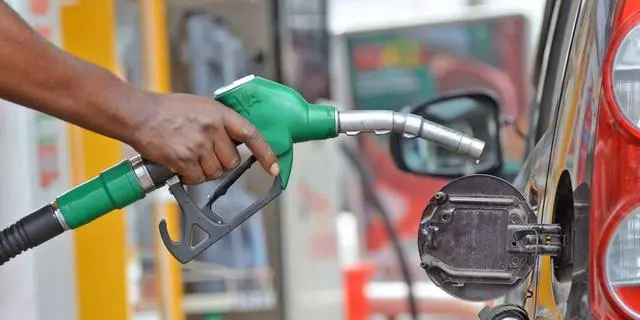
The Independent Petroleum Marketers Association of Nigeria (IPMAN) is seeking 50 percent petrol allocation from the Nigerian National Petroleum Company (NNPC) Limited to reduce prices and queues in filling stations.
Speaking with NAN on Friday, Hammed Fasola, IPMAN national vice-president, said the fuel scarcity was due to low allocation.
Fasola said if IPMAN members receive petrol directly from NNPC, the price per litre will be more affordable for Nigerians, and it will help reduce the queues at filling stations.

He said IPMAN members sell petrol at higher prices because they purchase the product at inflated rates from third parties.
The vice-president said the association has submitted its stance on petrol allocation to the NNPC, requesting that it be increased to 50 percent, as it was in the past.

“It is not that we don’t get at all, we are getting a little, and when you compare our number in this sector; our members own 80 percent of the filling stations. In the past, it was not like this,” Fasola said.
“We had a share of 50 percent but recently, things have changed, and we are trying to talk to the authorities, especially the NNPC that they have to correct that abnormality.
“We are still trying to address the issue. This is why the independent marketers are selling at a higher price, which is not good for our image.”
Fasola said its members are being forced to buy petrol from private depot owners, which they find unacceptable.
“We go there sometimes, and they will sell at N720 per litre, and in their own stations, they are selling N620 or N650 per litre; you can see the disparity and the public will not understand,” he said.
“This is why we are trying to educate the people that we are not shrewd business people who want to milk Nigerians.
“Some filling stations have closed for business because they can’t cope – this is the situation we found ourselves in; until the government corrects it and everybody is on the same level.”
He appealed to NNPC to rectify the allocation issues so that IPMAN members can obtain fuel directly and fairly, benefiting both the marketers and the public.
On the purported increase in petrol price, Fasola dismissed it as “fake news,” stating that the association has not received any official information regarding such a change.
On July 8, queues for petrol resurfaced across filling stations in Lagos and the federal capital territory (FCT).
Speaking on the situation, Clement Isong, executive secretary at Major Energies Marketers Association of Nigeria (MEMAN), said the delay in loading petroleum products at depots was a contributory factor to the situation.
On its part, NNPC said the petrol queues in the FCT are primarily caused by the disruption of ship-to-ship (STS) transfer of petrol between mother vessels and daughter vessels.
The national oil firm said this was due to recent thunderstorms and the consequential flooding of trucking routes which constrained movement of petrol to Abuja from coastal corridors.