

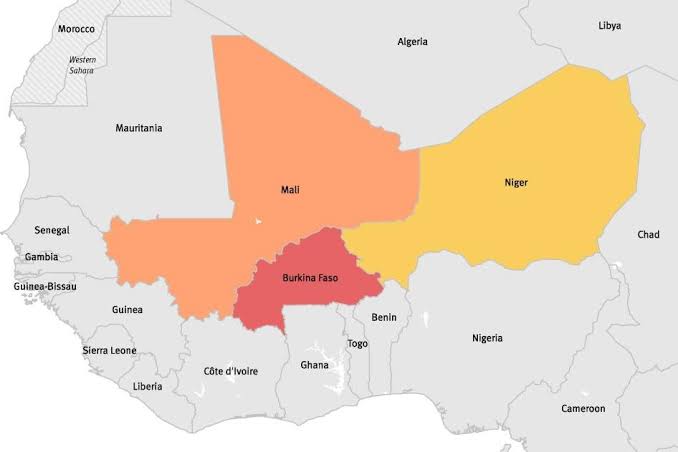
Mali, Burkina Faso, and Niger have introduced a 0.5% levy on imported goods from the Economic Community of West African States (ECOWAS) member nations including Nigeria.
This levy, effective immediately, is intended to finance their newly formed three-state union following their collective departure from the broader ECOWAS bloc.
The three West African nations, all governed by military juntas that rose to power through recent coups, launched the Alliance of Sahel States in 2023 as a security pact.

Over time, this alliance evolved into an aspiring economic union with plans to promote deeper military and economic integration, including the introduction of biometric passports.
Economic implications of the levy
The newly imposed levy will apply to all goods imported from outside the three countries, excluding humanitarian aid. The official statement noted that the funds generated would “finance the activities” of the alliance but did not provide further specifics.

The trade ties between Niger and Nigeria highlight the potential impact of this new policy. In 2022, Niger imported goods worth $290 million from Nigeria, making Nigeria one of its top five trading partners, data from World Integrated Trade Solution shows.
Conversely, Niger exported goods valued at $68 million to Nigeria that same year.
However, by 2023, Nigeria’s exports to Niger decreased to $209 million, with key products including Petroleum Gas ($44.6M), Electricity ($41.5M), and Cement ($32.8M), according to data from the Observatory of Economic Complexity.
This levy marks the end of decades of free trade across ECOWAS nations and underscores the widening rift between the Alliance of Sahel States and influential democracies like Nigeria and Ghana to the south.
The departure from ECOWAS last year followed accusations from the three juntas that the bloc had failed to provide adequate support in combating Islamist insurgencies and resolving insecurity in their territories.
The economic sanctions imposed by ECOWAS on Mali, Burkina Faso, and Niger to encourage a return to constitutional governance have largely failed to yield results.
Instead, these nations have doubled down on their efforts to establish independent political and economic frameworks.
The three countries remain among the poorest in the world, grappling with widespread violence attributed to Islamist insurgencies linked to al Qaeda and the Islamic State.
Over the past decade, the insurgencies have claimed thousands of lives, displaced millions, and eroded public trust in the democratically elected governments that struggled to curb the unrest.
Observers note that this new levy could significantly alter trade dynamics across West Africa, particularly for Nigeria, whose economy and exports are deeply intertwined with its neighboring countries.
The move also raises questions about the future of ECOWAS, as internal fractures continue to challenge its effectiveness as a regional bloc.
Additionally, this development may prompt businesses operating across West Africa to rethink their strategies amid changing political and economic alliances. It is yet to be seen how the Alliance of Sahel States will manage the growing financial and security pressures that prompted their departure from ECOWAS in the first place.


