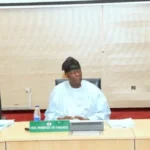

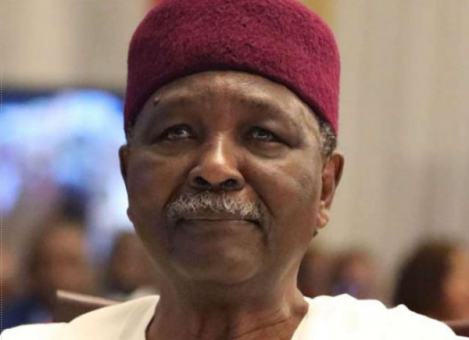

Former Head of State Gen Yakubu Gowon yesterday gave an insight into why the Aburi Accord, a truce pact reached to stave off the 1966 Nigerian Civil War, failed.

He said that Col. Chukwuemeka Odumegwu Ojukwu, who then the Eastern Nigeria governor, wanted regional governors to control military zones.
Gowon was Nigeria’s military ruler from 1966 till July 29. 1975, when his regime was toppled in a coup led by Brig. Gen. Murtala Mohammed.

The meeting that led to the accord took place from January 4 to 5, 1967, in Aburi, Ghana, with delegates from both sides (the Gowon-led Federal Government and the Eastern region) of the divide making inputs.
The point of the agreement was that each region should be responsible for its affairs.

During the meeting, delegates arrived at certain resolutions on the control and structure of the military. However, the exact agreement reached was the subject of controversy.
The failure of the Aburi accord culminated in civil war, which began on July 6, 1967 and ended on January 15, 1970.
Speaking on national television, Gowon said resolutions at the meeting would have been discussed further and finalised, but he took ill after arriving in Nigeria.
He alleged that Ojukwu went on to make unauthorised statements about the accord. The former military ruler added that he did not know where Ojukwu got his version of the agreement from.
His words: “We just went there (Aburi), as far as we were concerned, to meet as officers and then agree to get back home and resolve the problem at home. That was my understanding. But that was not his (Ojukwu) understanding.
“Unfortunately, I know people would not believe it, I was having a serious attack of some kind of fever or whatever it was, and I could not make a decision when we arrived home.
“It was Ojukwu who made some statements about the Aburi Accord.”
He added that a follow-up meeting to clarify the issues in the agreement was scheduled for Benin City, with invitations sent to Ojukwu and other regional governors.
Gowon said Ojukwu declined the invitation, citing safety concerns.
He added: “I don’t know what accord he (Ojukwu) was reading because he came to the meeting with prepared papers of things he wanted, and of course, we discussed them one by one. Agreed on some and disagreed on some.
“For example, to give one of the major issues, we said that the military would be zoned, but the control… he wanted those zones to be commanded by the governor.
“When you have a military zone in the north, it would be commanded by the governor of the military in the North, the military zone in the east would be commanded by him. Of course, we did not agree with that one.”
Gowon expressed optimism about the country’s progress, saying that it is thriving 55 years after the Civil War ended.
He reflected on the post-war era and the long-term impact of his “no victor, no vanquished” declaration.
“Well, thriving… isn’t Nigeria thriving today? Have we not gone beyond where we were 55 years ago?” the former military ruler asked rhetorically. “Certainly, I did not mean that things will be perfect… but at least we have survived as a country, improving at every stage to where we are.”
Asked if national survival equates to healing and development, Gowon highlighted the progress made in the Eastern region, which bore the brunt of the war.
“There is great progress happening in the East. I certainly did not try to stop development. Things are improving as time goes on,” he said.
Defending his administration’s handling of oil revenue during the post-war period, Gowon said the funds were strategically used for reconstruction and national reintegration.
“We ensured those resources were used for reconstruction, rehabilitation and reintegration—what we called the three Rs,” he stated. “We restored damaged schools, hospitals, and infrastructure in the East and other affected parts of the country.”
On the controversial 1975 “cement scandal,” in which Nigeria reportedly over-ordered cement, thereby clogging the ports, Gowon dismissed the claims as misinformed.
“That was virtually before my overthrow. There was a global shortage of cement and a glut of shipping,” he explained. “People assumed we ordered more than our ports could handle, but that was a false allegation.”
How I want to be remembered
“I want to be remembered as someone who loves his country, Nigeria, who loves Nigerians, and who prays that if I cannot fight it, at least I can pray for Nigeria to continue to be a country that all of us would love,” said the 89-year-old statesman.
In a lighter moment, Gowon responded to reports that former U.S. President Donald Trump was considering including Nigeria on a visa restriction list.
“Well, I heard that Trump says that Nigeria might be one of those countries that they are going to deny a visa. So it meant I cannot go to America anymore,” he said jokingly.
“It means that I should try to make my country better than America so that I can stay in Nigeria.”