

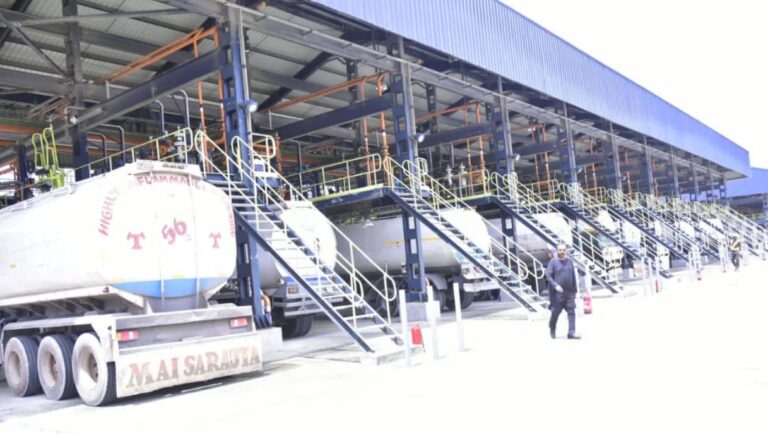

Pump prices of petrol across Nigeria could soon rise to between N980 and above N1,000 per litre, following a fresh increase in the gantry price by the Dangote Petroleum Refinery.

The refinery raised its ex-depot price of Premium Motor Spirit (PMS) to N874 per litre from N774, citing volatility in global crude oil markets and rising replacement costs. The adjustment is already filtering through the downstream market.
Confirming the likely impact, the National Publicity Secretary of the Independent Petroleum Marketers Association of Nigeria (IPMAN), Chinedu Ukadike, said pump prices would vary by location and logistics. “With the new Dangote price, petrol will likely sell between N980 and over N1,000 per litre nationwide. The major driver is the recent increase in global crude oil prices,” he said.

A senior official of the refinery said the review became unavoidable. “The price has been adjusted to reflect changes in global crude fundamentals and replacement costs,” the official said.
Market checks showed that the new price had been reflected across depots and the downstream value chain. In a notice to marketers, the refinery stated that PMS was available at N874 per litre.
The hike followed a temporary suspension of petrol loading at the refinery from midnight on March 2, 2026, after international crude prices climbed above $80 per barrel. While PMS loading was paused, diesel supply continued. Several depot owners also halted petrol sales to reassess costs. “Nobody wants to sell below replacement cost,” a downstream operator said.
The price pressure comes amid heightened global oil market volatility linked to escalating tensions in the Middle East, particularly around the Strait of Hormuz, a key global energy corridor. Analysts warn that sustained disruption could push crude prices higher and further raise domestic fuel costs despite Nigeria’s growing refining capacity.
JPMorgan Chase has warned that Brent crude could surge to $120 per barrel if prolonged conflict disrupts oil flows through the strait. The bank noted that Gulf producers could maintain output for only about 25 days before storage constraints force wider shutdowns.
Oil prices jumped sharply on Monday after a major escalation involving the United States, Israel and Iran. Brent crude rose 8.7 percent to $79.28 per barrel, while West Texas Intermediate gained 7.8 percent to $72.16. Shipping through the strait has reportedly fallen by about 70 percent, with war-risk insurance premiums jumping by as much as 50 percent. Major shipping lines, including Hapag-Lloyd and CMA CGM, have temporarily suspended transits.

Against this backdrop, the President of the Dangote Group, Aliko Dangote, has unveiled plans to expand into electricity generation, steel production and port infrastructure as part of a broader industrialisation drive.
“We have to industrialise Africa,” Dangote said in a recent interview with The New York Times, stressing that reliable electricity is essential for manufacturing-led growth. The group currently generates over 1.5 megawatts of power for its operations, compared with Nigeria’s national output of under 5,000 MW.
According to the company, the Dangote Petroleum Refinery & Petrochemicals is now producing about 650,000 barrels of refined products daily, with output expected to rise significantly as expansion plans mature. The refinery employs about 30,000 workers, around 80 percent Nigerians, with total group employment projected to reach 65,000 as new investments come on stream.
Dangote also disclosed plans to list the refinery on the Nigerian stock market to widen local participation, while acknowledging ongoing challenges, including logistics constraints and crude supply inefficiencies.
Industry analysts say the refinery’s latest price increase underscores Nigeria’s continued exposure to global oil market shocks, even as domestic refining expands. With the new gantry price at N874 per litre, retail petrol prices could breach N1,000 per litre if international tensions persist and crude prices continue to climb.
The episode highlights both the vulnerability of Nigeria’s fuel pricing to global events and the growing role of large private investments in strengthening domestic energy security and driving industrial growth.