

Businesses across Nigeria are preparing for a fresh wave of cost pressures after the pump price of petrol climbed to about N1,300 per litre in several parts of the country on Monday, raising concerns about a new round of inflation that could ripple through transport, manufacturing and food distribution.

The price surge followed a fresh increase in the gantry price of Premium Motor Spirit (petrol) by the Dangote Petroleum Refinery, which raised its ex-depot rate from N995 to N1,175 per litre—an increase of N180 or roughly 18 per cent within three days. Diesel prices were also revised upward to N1,620 per litre.
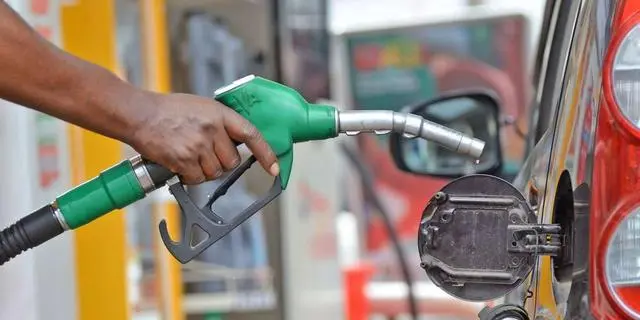
The adjustment triggered immediate reactions across the downstream market, with many filling stations raising pump prices to between N1,200 and N1,400 per litre, depending on location and supply costs.

Industry analysts and business groups warn that the development could quickly feed into higher transport fares, rising logistics costs and more expensive consumer goods, potentially reversing recent progress made in moderating inflation.
Global crisis drives oil volatility
The sharp rise in domestic fuel prices comes amid heightened geopolitical tensions in the Middle East following the escalating conflict involving the United States, Israel and Iran, which has disrupted global oil supply routes and triggered volatility in international crude markets.
At the height of the crisis on Monday, crude oil prices briefly surged to nearly $120 per barrel before easing to around $98 later in the day as global powers weighed emergency measures to stabilise supply.
A significant share of global oil shipments passes through the strategic Strait of Hormuz, a narrow maritime corridor linking the Persian Gulf to global markets. Disruptions in the region have raised fears of prolonged supply shortages and soaring freight costs for oil shipments worldwide.

Dangote refinery explains price adjustment
Defending the increase, the management of the Dangote Petroleum Refinery said the adjustment reflects the realities of global commodity markets rather than domestic pricing decisions.
According to the refinery’s Managing Director and Chief Executive Officer, David Bird, the facility remains fully exposed to international crude prices and other cost drivers such as shipping, insurance and financing.
He explained that crude prices had surged sharply in recent days, while freight rates for oil tankers have jumped dramatically—from about $800,000 per shipment to roughly $3.5m amid the ongoing geopolitical crisis.
Bird noted that even under Nigeria’s crude-for-naira supply framework, the refinery purchases crude at international benchmark prices rather than at discounted rates.
He added that the refinery is currently operating at its nameplate capacity of about 650,000 barrels per day and could potentially increase production to 700,000 barrels daily as operations stabilise.
According to him, the existence of domestic refining capacity has nonetheless helped Nigeria avoid severe fuel shortages and long queues despite global market disruptions.
Businesses warn of inflation spike
Leaders of the Organised Private Sector say the price surge will inevitably drive inflationary pressures across the economy.
The Director-General of the Lagos Chamber of Commerce and Industry, Chinyere Almona, said rising petrol prices were already increasing logistics and transportation costs.
“We are already seeing increases in fuel pump prices, and this is likely to impact transport and food prices because of the logistics involved in food distribution,” she said.
Almona warned that the Middle East crisis could also increase global shipping costs, pushing up the price of imported goods and reversing recent gains recorded in slowing inflation.
She urged the government to deepen investments in domestic refining and manufacturing capacity to reduce Nigeria’s vulnerability to global energy shocks.
“With crude prices rising globally, Nigeria may benefit from increased oil revenues, but the government must channel such gains into infrastructure that supports local refining, manufacturing and mining,” she said.
Employers and SMEs feel the pressure
The Director-General of the Nigeria Employers’ Consultative Association, Adewale Oyerinde, said energy costs remain one of the biggest drivers of inflation in Nigeria.
He noted that higher fuel prices increase the cost of transportation and logistics, which in turn drives up the price of goods and services.
“Given the strong link between energy costs and transportation, such developments could exacerbate inflationary pressures, particularly food inflation,” he said.
Similarly, the President of the Association of Small Business Owners of Nigeria, Femi Egbesola, warned that small businesses will face rising production costs.
He said higher petrol and diesel prices will affect manufacturing, supply chains and distribution networks, ultimately forcing businesses to increase prices.
“Energy costs affect virtually every sector—from manufacturing to transportation. When fuel prices increase, the cost of goods and services inevitably follows,” he said.
Labour questions refining claims
The development has also drawn criticism from the Nigeria Labour Congress, which argued that the price surge exposes persistent weaknesses in Nigeria’s downstream petroleum sector.
The union’s Assistant General Secretary, Christopher Onyeka, said the strong influence of global oil prices on domestic petrol costs raises questions about Nigeria’s refining capacity.
“If we were truly refining domestically at scale, international events should not have such a strong impact on local petrol prices,” he said.
Onyeka argued that the situation suggests Nigeria still relies heavily on imported refined fuel despite the emergence of domestic refining facilities.
Economists highlight structural challenges
Economists say Nigeria’s exposure to global oil shocks remains high because domestic refining capacity is still insufficient to meet national demand.
An economist, Aliyu Ilias, noted that while rising oil prices should ordinarily benefit an oil-producing country, Nigeria’s structural weaknesses often turn the situation into an economic burden.
“We do not produce most of what we consume, and therefore cannot rely on domestic pricing mechanisms to cushion global shocks,” he said.
Former chief economist at Zenith Bank, Marcel Okeke, added that transportation costs typically respond first to fuel price increases.
“When transport fares rise, it creates a ripple effect across the economy—affecting food prices, logistics, rent and services,” he explained.
Global response under consideration
Meanwhile, the Group of Seven (G7) nations say they are considering emergency measures to stabilise global energy markets.
According to officials, member countries currently hold more than 1.2 billion barrels of public emergency oil stocks, with an additional 600 million barrels maintained by industry under government obligations.
Although discussions are ongoing, no final decision has yet been reached on whether to release strategic reserves into the market.
Analysts say such a move could help ease global oil prices if supply disruptions persist.
Outlook
Industry observers warn that if geopolitical tensions continue and global oil prices remain elevated, petrol prices in Nigeria could climb further.
Retailers in the downstream sector have already projected that petrol could approach N2,000 per litre if the crisis worsens and supply constraints deepen.
For businesses and households already grappling with high living costs and unstable electricity supply, the latest fuel price surge threatens to compound economic pressures in the months ahead.