

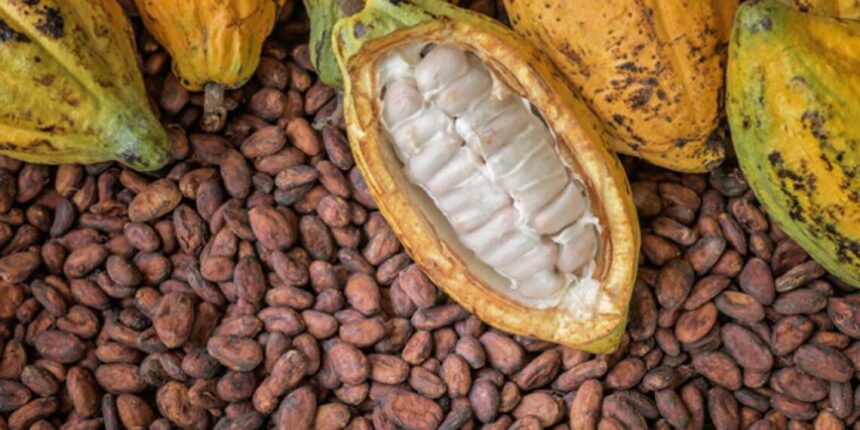

Cocoa farmers in Ondo, Osun, and Ekiti have expressed deep concern over a dramatic fall in cocoa bean prices, which they say has left many in financial distress and unable to sustain their livelihoods.

The development was reported by the News Agency of Nigeria (NAN), based on interviews with farmers across the three states.
According to the farmers, what began as a windfall period in 2024 has turned into a severe income shock, with cocoa prices dropping by more than 70 per cent from historic highs, leaving some farmers in debt and struggling to find buyers for their harvests.

Accounts by different farmers paint a grim picture of the situation on the ground.
Mr Abiodun Joseph, a young cocoa farmer in Owo, Ondo, described the crash in prices as devastating, saying many young farmers have been discouraged from continuing cocoa cultivation.

“At a stage, cocoa price increased, and everything connected to cocoa farming, such as chemicals and labour, increased as well, but now the price has crashed to about 80 per cent, while the costs of inputs and labour are soaring.
The 39-year-old cocoa farmer disclosed that the price of one kilogram of cocoa has fallen from N14,500 to N2,500.
“As of January 2025, cocoa was sold for N14,500 per kilogram, but now it has dropped to between N2,500 and N2,000 per kilogram. As of now, it is difficult for an average farmer to cope with the standard of living based on the sharp decline in price.”
Similarly, Mr Olanrewaju Abiodun, a Local Buying Agent in Ondo, warned that the slump has affected everyone in the cocoa business chain, with many dealers running out of business due to losses.
“The sharp decline in price is equally affecting the dealers and everyone in the cocoa business chain. As of today, the majority of cocoa dealers are bankrupt, with many hiding from their creditors. Many dealers are being forced out of the cocoa business due to losses,” he added.
Other farmers, including Mr David Ogunmakinwa and Mr Kola Akinmoye, blamed the slump partly on mismanagement and abandonment by some youths who had ventured into cocoa farming during the boom. They called for government support, including subsidies for essential farm inputs.
Experts and officials have also weighed in on the crisis.
Mr Olutayo Owoeye, Coordinator of the All Farmers Association of Nigeria (AFAN) in Ekiti, described the downturn as a major setback, warning that some farmers may replace cocoa trees with alternative crops if prices do not recover.
“We may be heading for serious consequences, as our cocoa farmers have vowed to cut down their cocoa trees and replace them with other viable alternative crops or commodities if the downturn in cocoa prices continues,” he said.
Agricultural expert Mr James Yahaya attributed the price fall to a market correction following a historic global surge in cocoa prices, declining global demand due to high chocolate prices, and increased local production in West Africa.
He recommended minimum price guarantees, stronger cooperatives, and forward pricing to protect farmers’ investments.
The Ekiti Commissioner for Agriculture and Food Security, Mr Ebenezer Boluwade, highlighted state-level interventions, including a 10-year cocoa development policy, provision of improved seedlings, agrochemical subsidies, and irrigation support to boost local production despite market instability.
“The Ekiti State Government, in partnership with the TRACE Project, has presented irrigation pumps worth about N10 million to 28 cocoa nursery operators across local government areas of the state. The beneficiaries had undergone training on best practices in raising cocoa seedlings to boost cocoa production in the state,” he said.
Nigerian farmers are not alone in experiencing such swings. According to Adeyinka Adebayo, a finance professional experienced in managing global trading operations for cocoa, the cocoa market in May 2025 surged to nearly $10,000 per metric ton before collapsing to approximately $4,197 per ton by February 2026—a 62% drop in just nine months.
The collapse was driven by a combination of factors, including a strong recovery in Côte d’Ivoire, Ecuador’s production expansion, and falling chocolate demand in Europe, North America, and Asia due to high prices.
“From a historic lens, January was supposed to save everything…Unfortunately, it did not. Prices fell 44% from approximately $6,159 a ton to $4,260 in just one month,” Adebayo noted.
The boom-and-bust cycle reflects broader challenges for cocoa producers in West Africa, including dependency on raw exports, global market volatility, and domestic structural weaknesses in processing and pricing control.
Until demand stabilizes and the supply-demand balance is restored, Nigerian cocoa farmers remain vulnerable to severe income shocks, with many at risk of abandoning their plantations.