


By Nwagboniwe I. Emmanuel

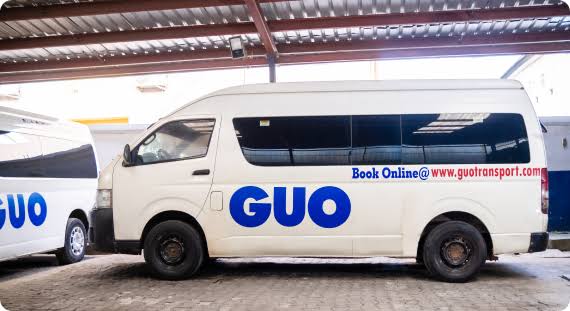
The sad news broke last Saturday, April 18, 2026, of the killing of a GUO Transport Co. driver along the Benin–Ore Road, alongside the kidnap of about 14 passengers aboard an 18-seater bus.
In a video that also went viral, the lifeless body of the driver was seen face down on his seat. According to eyewitnesses who arrived at the crime scene a few minutes later, the abducted passengers were brutally marched into the bush—to only God knows where.
Expectedly, the incident attracted the usual grief and outcry over the mounting insecurity in the country, thereby heightening commuters’ fears over criminals’ renewed siege on the comparatively “safer” Lagos–Benin highway.

However, while a mother of one of the kidnapped victims took to social media soliciting financial help for her loved one’s release, GUO Transport Co. added a worrisome twist via a press release it issued later.
In a statement signed by its management, the firm lamented the killing of its driver but said nothing about the reported kidnap of passengers. It stated: “A Toyota Hiace bus dispatched empty (emphasis mine) from Lagos to Onitsha was ambushed by armed robbers along the Okada–Benin Road.”
In the same terse statement, no mention was made of any kidnap incident. Rather, it focused on the sense of loss the driver’s death had brought to the company and the efforts being made to support his bereaved family.

While it is expected that the company would express such grief over the cruel death of its driver—especially given the sanctity of human life—its deafening silence on the kidnap incident has led many to wonder whether the lives of the passengers in its vehicle matter at all to it.
The entire episode has also raised several unanswered questions. For instance, if the Toyota Hiace was dispatched empty from Lagos to Onitsha, how did the same vehicle end up with passengers? Did the now-slain driver pick up passengers along the road without the knowledge of the company’s management? Or was another GUO Transport Co. vehicle involved in a similar attack and kidnap incident?
More troubling still, could it be that the company is deliberately downplaying the kidnap aspect of the incident in order not to jeopardise its business interests and patronage?
Furthermore, how does one juxtapose the company’s silence on the abduction with the SOS WhatsApp message of a mother publicly crying out for help? Is she to be dismissed as fake or a scammer?
In a news report by Punch Newspapers on April 25, the Edo State Police Command disclosed that it had rescued about seven kidnap victims, including three abducted in the GUO Transport Co. incident.
These questions are necessary because the public deserves to know who is telling the full truth—the transport company on one hand, or the victim’s mother and the police on the other.
For all men of conscience who value human life, it is unacceptable and callous for a company of GUO Transport’s stature to appear to downplay an incident of such magnitude, ostensibly to protect its business interests.
Every life matters, and no one knows the fate of those yet to be rescued. We hope to be proven wrong if GUO Transport goes further to set the record straight.
In conclusion, our businesses must, at all times, wear a human and compassionate face; they must not assume a faceless posture in pursuit of financial gain.
Nwagboniwe I. Emmanuel is a media practitioner based in Lagos.