

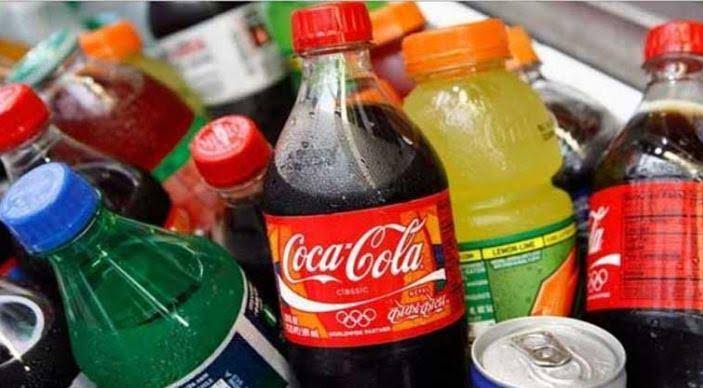
The prices of soft drinks and other sugar-sweetened beverages may increase after the Senate approved a new excise duty regime that replaces the current flat-rate tax with a percentage-based levy tied to retail prices.
The upper chamber approved the measure on Wednesday during plenary while considering and adopting the report on the Customs, Excise Tariff, etc. (Amendment) Bill.
Lawmakers also endorsed the creation of a dedicated funding stream to support public health interventions across the country.

The move is aimed at curbing the growing burden of non-communicable diseases (NCDs), including diabetes, obesity, hypertension and cardiovascular diseases, which health experts have increasingly linked to excessive sugar consumption and unhealthy dietary habits.
The approval followed the adoption of a report presented by the Chairman of the Senate Committee on Finance, Sen. Sani Musa, on behalf of the Joint Committee on Finance and Customs, Excise and Tariff.

Under the current tax regime, manufacturers and importers of sugar-sweetened beverages pay an excise duty of N10 per litre on products such as carbonated drinks, energy drinks and other sweetened beverages. The tax was introduced to discourage excessive sugar consumption while generating additional revenue for healthcare spending.
However, Musa told lawmakers that the existing framework has lost much of its effectiveness as inflation has significantly reduced the real value of the levy over time.
According to him, the fixed-rate tax no longer provides a strong enough incentive to discourage excessive consumption of sugary drinks, while its contribution to government revenue has also weakened amid rising prices across the economy.
To address the challenge, the Senate approved a new framework that will replace the flat-rate levy with a percentage-based excise duty linked to retail prices. The exact structure of the levy will be determined by the Minister of Finance in line with global best practices.
When the levy was first introduced, a bottle of soft drink sold for about N150. Today, the same products typically retail between N350 and N450, reducing the relative impact of the N10-per-litre charge on consumer behaviour.
Nigeria remains one of Africa’s largest consumers of sugar, with annual consumption estimated at about 1.8 million metric tonnes.
More than 90% of this demand is met through imported raw sugar, which is subsequently refined locally by major industry players such as Dangote Sugar Refinery and Golden Penny.
Health experts have long warned that excessive sugar consumption, particularly through ultra-processed foods and beverages, is contributing to a rise in lifestyle-related illnesses including diabetes, obesity, hypertension and cardiovascular diseases.
The burden of these diseases has become increasingly visible in Nigeria. Current estimates suggest that about 8% of Nigerians live with diabetes, translating to roughly 18 million people based on the country’s population. Hypertension is even more widespread, with at least 40% of Nigerian adults estimated to be living with the condition.
The Senate noted that Nigeria’s healthcare system remains heavily dependent on out-of-pocket spending, exposing millions of households to financial hardship whenever serious illnesses occur.
Although the Centre for the Promotion of Private Enterprise (CPPE) has warned against imposition of additional taxes on sugar-sweetened non-alcoholic beverages in Nigeria, citing economic pressure, the Senate’s decision comes against the backdrop of the country’s enormous soft drink market and growing concerns over the economic cost of non-communicable diseases.
According to available industry estimates, Nigerians consume about 38.6 million litres of soft drinks daily, making the country the fourth-largest consumer of soft drinks globally.
At the current excise rate of N10 per litre, the Federal Government generates approximately N386 million every day from the levy.
Several studies have consequently recommended increasing the tax to as much as N130 per litre, or at least 20% of the retail price, to achieve a more meaningful public health outcome.
The health burden associated with excessive sugar consumption is also substantial. According to the latest National Health Accounts data, Nigerian households with patients suffering from non-communicable diseases spend an average of N608,940, or about $398.52, annually on treatment and care.
Collectively, Nigerians spend an estimated $1.26 billion, equivalent to about N1.92 trillion, every year managing NCDs, placing significant financial pressure on households and deepening economic vulnerability for many families.