

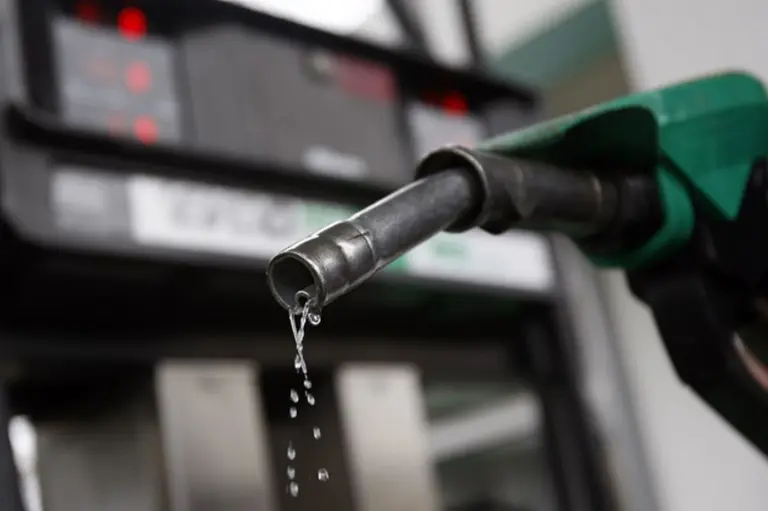
The Federal Government has directed the Nigerian Midstream and Downstream Petroleum Regulatory Authority (NMDPRA) to take immediate steps to prevent petroleum marketers from profiteering at the expense of Nigerians and to ensure that falling global crude oil prices translate into lower petrol prices at filling stations.

The directive comes amid mounting public concern that the pump price of Premium Motor Spirit (PMS), popularly known as petrol, has remained elevated despite a sharp decline in international crude oil prices following the easing of tensions in the Middle East.
Minister of State for Petroleum Resources (Oil), Senator Heineken Lokpobiri, issued the directive in Abuja on Monday while addressing the 2026 NMDPRA General Counsel and Legal Advisers Forum.

Lokpobiri said the era of fuel subsidies had ended and prices would continue to be largely determined by market forces, but stressed that deregulation must not become an excuse for excessive pricing and unfair market practices.
He said Nigerians expected pump prices to decline after crude oil prices retreated significantly from recent highs, noting that the government was concerned that consumers had yet to benefit from the easing in international oil markets.

“Following the de-escalation of tensions involving the United States and Iran, we expected to see commensurate downward adjustments in the prices of PMS and other petroleum products. However, that has not yet happened,” the minister said.
He added that while market forces would eventually restore equilibrium, the regulator had a statutory obligation under the Petroleum Industry Act to prevent exploitation of consumers.
The minister’s remarks effectively amount to a government push for lower petrol prices, with the NMDPRA now expected to intensify market surveillance and ensure that marketers do not retain unusually high margins when international costs have declined.
The position mirrors recent actions taken in the United States, where President Donald Trump repeatedly called on oil companies and fuel retailers to reduce gasoline prices as crude oil prices fell. Trump had publicly warned against what he described as price gouging and urged companies not to exploit geopolitical tensions to maintain elevated fuel prices after market conditions had changed.
Similarly, the Nigerian government is insisting that the benefits of lower crude prices should flow through the supply chain and ultimately reach consumers at filling stations.
Crude oil prices had surged during the period of heightened tensions in the Middle East, climbing above $120 per barrel in some markets. However, prices subsequently declined sharply to around $72 per barrel following diplomatic efforts and the easing of hostilities.
Despite the decline, petrol prices in Nigeria have remained largely unchanged, prompting concerns among consumers, labour groups and industry stakeholders that marketers may be maintaining prices above levels justified by prevailing market fundamentals.
Beyond pricing, Lokpobiri directed the regulator to strengthen monitoring of retail outlets to ensure consumers receive the correct quantity of fuel purchased.
“When somebody pays for 10 litres of PMS, the person should receive exactly 10 litres and not less,” he said.
The minister emphasised that consumer protection remains a key responsibility of the regulator even under a deregulated market system.
The government also credited the deregulation of the downstream sector and increased domestic refining capacity for helping Nigeria avoid fuel shortages during the recent geopolitical tensions involving the United States and Iran.
According to Lokpobiri, the implementation of the Petroleum Industry Act has created the legal framework for a more competitive petroleum sector, but the success of the reforms depends on regulatory certainty, transparency and investor confidence.
He said Nigeria would ultimately be judged not by the number of regulations issued but by the investments attracted, jobs created and economic value generated by the industry.
Earlier, the Chief Executive of the NMDPRA, Farouk Ahmed, said the industry had reached a stage where regulatory certainty and transparency had become as important as compliance.
He said investors now pay greater attention to how regulations are implemented and whether policies remain predictable over the long term.
Ahmed assured stakeholders that the authority would continue to regulate the industry fairly while engaging operators to improve compliance and market efficiency.
The renewed government pressure on marketers comes amid increasing calls from consumers for lower pump prices as international oil prices moderate, with regulators now facing the challenge of balancing a fully deregulated market with the need to prevent excessive profiteering and protect consumers from unjustified price increases.