
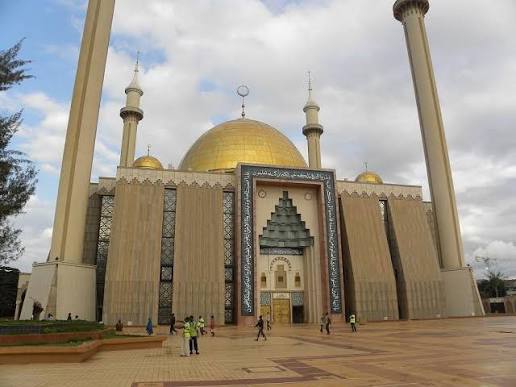
At least 78 Ministries, Departments and Agencies (MDAs) of the Federal Government have proposed almost N400 billion in the 2026 budget for the construction and rehabilitation of community-based projects, including mosques, traditional rulers’ palaces, village market squares, civic centres and community halls, triggering renewed debate over Nigeria’s public spending priorities.

An analysis of the 2026 Appropriation Act indicates that more than half of the allocations are tied to projects that critics argue fall outside the statutory mandates of many of the agencies involved.
Apart from religious and traditional institutions, the budget also contains provisions for the supply of motorcycles, tricycles, grains, sponsorship of community thrift societies, construction of museums and mini-stadia, among other constituency-type projects.
The agencies with such allocations cut across virtually every sector of government, including the Defence Headquarters, the Nigerian Air Force, the Nigerian Defence Academy, the Technical Aid Corps, the Ministry of Information and National Orientation, the Ministry of Industry, Trade and Investment, the Office of the Auditor-General for the Federation, the Industrial Training Fund, the National Building and Road Research Institute (NBRRI), the National Productivity Centre, and several research institutes and federal colleges.

The spending pattern has attracted criticism from economists and public finance experts, who argue that scarce national resources should instead be directed towards critical sectors such as healthcare, education, power, transportation, security and other infrastructure capable of delivering broader economic benefits.
They contend that the proliferation of hundreds of small-scale projects weakens fiscal discipline, fragments public investment and limits government’s ability to fund transformational projects with measurable developmental impact.
Analysts also expressed concern that several projects included in the budget bear little or no relationship to the statutory responsibilities of the agencies expected to execute them.

For example, the National Building and Road Research Institute, whose primary mandate is research into building materials and road construction technologies, is expected to fund projects such as village halls in Anambra State, an international market in Jigawa State, traditional rulers’ palaces in Rivers and Kogi states, market stalls in Borno, a multipurpose hall in Kaduna State and the remodelling of mosques in Kebbi, Ekiti and Jigawa states. Collectively, the projects are valued at over N4 billion.
Similarly, the National Productivity Centre’s budget includes funding for support to Ijaw musicians, construction of an Emir’s palace in Yobe State, refurbishment of Obas’ palaces in Ogun State, an abattoir in Gombe State and an econometrics laboratory in Ekiti State.
The National Mathematical Centre is also expected to finance the construction of a Sociology Department building at Ahmadu Bello University, Zaria, a project observers say falls outside its core mandate of advancing mathematical research and training.
A consultant economist and former central banker, Chukwunonso Ihuma, blamed the National Assembly for the growing number of projects unrelated to the mandates of government agencies.
According to him, lawmakers frequently increase budget proposals submitted by ministries and agencies before inserting projects that have limited national impact.
He advocated a return to strict zero-based budgeting, under which every expenditure must be justified from scratch each fiscal year.
Ihuma argued that markets, civic centres and similar community projects are more appropriately handled by state and local governments, while traditional rulers should fund the renovation of their palaces through other means.
He also recommended empowering the Budget Office to reject projects that do not align with national priorities or the mandates of the implementing agencies.
The controversy comes as Nigeria continues to grapple with fiscal pressures despite adopting a record N68.32 trillion budget for 2026.
The Federal Government is simultaneously completing implementation of the 2025 budget after the National Assembly extended the capital expenditure deadline from June 30 to September 30, 2026, to allow ongoing projects to be completed and prevent abandonment.
Economic analysts have questioned the realism of the 2026 fiscal framework, noting that projected revenue of N36.87 trillion leaves a substantial financing gap to be bridged through borrowing.
The budget is based on an oil benchmark price of $75 per barrel, oil production of 1.84 million barrels per day, projected GDP growth of between 4.28 and 4.68 per cent, while debt servicing is estimated at N15.81 trillion.
The Nigerian Institute of Social and Economic Research (NISER) has warned that successful implementation of the budget will require stronger fiscal and monetary coordination, improved revenue mobilisation, structural reforms, economic diversification and better governance.
Also commenting, the Chief Executive Officer of the Centre for the Promotion of Private Enterprise (CPPE), Dr Muda Yusuf, said the Federal Government is facing increased fiscal pressure following the discontinuation of the Central Bank’s Ways and Means financing.
He noted that the administration now has fewer financing options and must either expand revenue generation or adjust spending to maintain fiscal sustainability.
Media strategist and former presidential adviser Umar Sani observed that not every project inserted into the budget is eventually implemented by the executive, a situation that has often fuelled disagreements between the executive and the legislature over budget execution.
The growing volume of constituency-style projects embedded in federal agency budgets has once again revived concerns over transparency, accountability and whether public expenditure is sufficiently aligned with Nigeria’s pressing development challenges.