
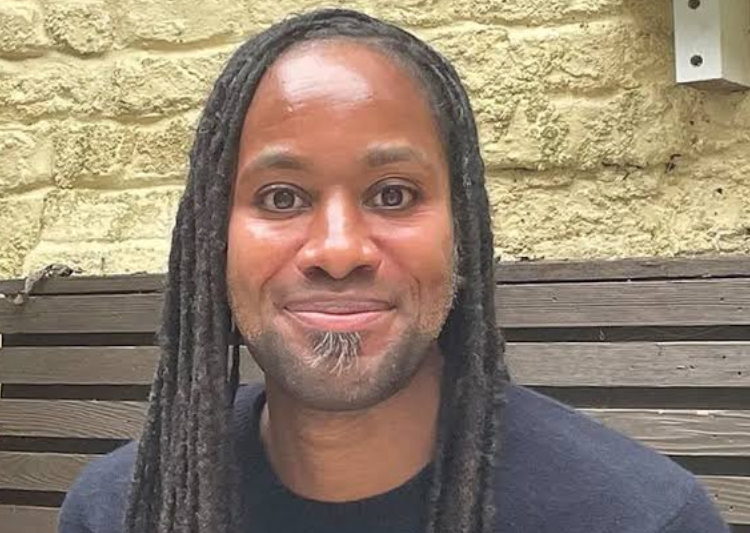

Jason Arday, who made history as the youngest Black professor appointed by the University of Cambridge, has been found dead in his south London home, days after resigning from the university amid a storm of allegations over plagiarism, his academic credentials and claims about his achievements.

Professor Jason Arday, the British sociologist who rose from a highly challenging childhood to one of the most prestigious academic positions in the United Kingdom, has died at the age of 41.
Arday was found unresponsive at an address in Battersea, south London, on Friday afternoon, August 14, 2026, in circumstances that came just nine days after he resigned from his professorship at the University of Cambridge.

The Metropolitan Police said officers were called by the London Ambulance Service shortly after 3pm. A 41-year-old man was pronounced dead at the scene.
Police said the death was being treated as unexpected but not suspicious, adding that officers from the Central South Command Unit were investigating and would prepare a file for the coroner. His next of kin had been informed and were being supported by officers.
The circumstances of Arday’s death were not immediately disclosed, and there was no indication from police that anyone else was involved.
His death came at the end of an extraordinary and increasingly turbulent chapter in the life of a man whose personal story had once been celebrated as one of the most inspirational journeys in British academia.

From childhood adversity to Cambridge
Arday was born and raised in Clapham, south London, to Ghanaian parents. His childhood was marked by profound developmental difficulties. Cambridge said he was diagnosed with autism spectrum disorder and global developmental delay at the age of three, and that he did not speak until he was 11 or learn to read and write until he was 18.
His family and mentors nevertheless pushed him towards education.
After eventually learning to read and write, Arday studied Physical Education and Education Studies, trained as a teacher and embarked on an academic career that advanced with remarkable speed.
He obtained a PhD in Education from Liverpool John Moores University in 2015 and subsequently held academic positions at institutions including Roehampton and Durham universities. In 2021, he became Professor of Sociology of Education at the University of Glasgow.
In March 2023, at 37, he joined Cambridge as Professor of Sociology of Education, becoming the youngest Black person ever appointed to a professorship at the university.
Cambridge described his appointment at the time as the latest chapter in a remarkable academic career and highlighted his work on race, inequality, education and the under-representation of ethnic minorities in higher education.
His research included racial inequality in universities, the experiences of Black students and academics, education policy, neurodiversity and the effects of discrimination.
The appointment was consequently celebrated not merely as a personal achievement but as a significant milestone in the diversification of one of Britain’s oldest and most prestigious universities.
Arday himself saw Cambridge as an opportunity to widen access to higher education.
His stated ambition was to help open doors for people from disadvantaged and under-represented backgrounds and to use his position to promote greater equality within academia.
An extraordinary life story
His rise attracted considerable public attention because of the apparent distance between his childhood circumstances and his eventual position at Cambridge.
Before becoming a professor, Arday had worked outside academia, including a period at Sainsbury’s, while pursuing his academic ambitions. He also spoke publicly about the difficulties of establishing himself in a university system that he believed offered little guidance to people from backgrounds such as his.
He became an inspirational figure for many young Black people seeking careers in higher education.
His story was also linked to his participation as a torchbearer in the 2012 London Olympics. He was widely recognised for charitable and sporting activities, including claims that he had raised millions of pounds for charity through endurance challenges.
But those achievements, like aspects of his academic career, would later become subjects of intense scrutiny.
The controversy that engulfed him
The controversy surrounding Arday erupted publicly in July 2026, when questions were raised about his 2015 PhD thesis and other aspects of his professional biography.
The Times reported on July 24 that sections of the thesis appeared to contain passages that were identical or nearly identical to material published earlier by another researcher. The allegations subsequently generated intense debate over whether Arday had committed plagiarism.
Arday denied deliberately plagiarising material.
He acknowledged mistakes in his doctoral work but rejected the broader portrayal of him as deliberately dishonest.
Crucially, there had been no final formal finding that Arday was guilty of plagiarism when he died.
Liverpool John Moores University, which awarded his PhD, had already investigated the allegations earlier in 2026 and upheld its decision to award him the doctorate. Cambridge subsequently opened its own inquiry after receiving what it described as new information concerning Arday’s academic qualifications and honorary appointments, as well as complaints relating to alleged academic misconduct.
The controversy extended beyond his thesis.
Questions were raised about some of the achievements described in his public biography, including claims relating to long-distance running and charity fundraising. The Associated Press reported that British media had scrutinised claims that he raised £5.5 million for charity through feats including running 30 marathons in 35 days and 600 miles in six days.
His publisher, Simon & Schuster, also came under scrutiny over changes to some biographical claims associated with his forthcoming memoir, Great and Unfortunate Things, which was published in the United States this week. The book tells the story of his childhood, his struggles with communication and literacy and his eventual rise to Cambridge.
Cambridge initially defended him
Cambridge initially resisted the growing pressure surrounding the allegations.
The university pointed to previous scrutiny of Arday’s qualifications and said he had been cleared by the institution that awarded his doctorate.
But the controversy intensified, with Cambridge academics calling for an independent examination of how Arday had been appointed to such a senior position.
On August 5, Cambridge announced that it would conduct an internal inquiry after receiving new information concerning his qualifications and honorary appointments, alongside complaints relating to alleged academic misconduct. Jesus College, where Arday was a member, also announced an inquiry.
The university subsequently agreed to a broader review of its hiring procedures.
Cambridge Vice-Chancellor Professor Deborah Prentice said the Arday case was an “aberration” and warned against allowing it to cast doubt on the work and legitimacy of other staff of colour at the university.
Resignation under mounting pressure
Arday resigned from Cambridge and Jesus College with immediate effect on August 5.
In his resignation statement, he said the decision should not be interpreted as an admission of the allegations against him.
He said the “relentless accusations, speculation and public commentary” had taken a profound toll on him and those close to him.
The resignation brought an abrupt end to a professorship that had initially been presented as a symbol of Cambridge’s efforts to become more representative of the society it serves.
It also intensified a debate over the balance between academic accountability and the treatment of minority scholars under intense public scrutiny.
Some Black academics argued that the affair had become much larger than questions surrounding one individual’s academic record.
They contended that the controversy had been amplified by a wider political backlash against diversity and inclusion initiatives in British universities.
Others, however, argued that the allegations should be judged on their merits and that race should not shield any academic from scrutiny over scholarly standards or professional credentials.
The Guardian reported that no formal investigation had, at that point, found Arday guilty of plagiarism, while academics remained sharply divided over the seriousness of the allegations and the manner in which they had been handled.
Family blames sustained campaign of abuse
Following his death, Arday’s family said he had endured what they described as a sustained campaign of abuse and misinformation.
In a statement released through Simon & Schuster, the family said Arday had been subjected to the campaign for more than three years following his appointment at Cambridge and claimed that those behind it were determined to undermine him.
The family described him as a gentle man and said the campaign had become too much for him.
They also appealed to the media to leave the family alone and end what they described as harassment.
London Mayor Sadiq Khan expressed shock at Arday’s death and criticised what he described as an unacceptable campaign of public hounding and abuse.
Cambridge Vice-Chancellor Prentice said the university was “desperately saddened” by the news and offered condolences to Arday’s family and friends. Durham University, where Arday had worked, also described him as a kind and warm person who actively supported opportunities for PhD students.
A remarkable story ends in tragedy
Arday’s death leaves behind a story that is difficult to separate from the fierce debate that surrounded the final weeks of his life.
He had gone from being a child whom medical professionals reportedly feared might never speak, read or live independently to becoming an internationally recognised academic and the youngest Black professor in Cambridge’s history.
He had built a scholarly career around race, inequality and educational opportunity and had become a prominent advocate for greater Black representation in British universities.
Yet, within weeks, his professional reputation was subjected to unprecedented scrutiny, his Cambridge appointment became the subject of an institutional investigation and he resigned.
His death now leaves many questions unanswered.
The coroner’s investigation will have to establish the circumstances and cause of death. For now, the Metropolitan Police has made clear that the death is being treated as unexpected but not suspicious.
There is therefore no official basis for linking Arday’s death to the plagiarism controversy.
What is beyond dispute, however, is the extraordinary speed with which a celebrated academic career moved from historic achievement to controversy and, ultimately, tragedy.
Arday’s recently published memoir, Great and Unfortunate Things, was intended to tell the story of a boy who overcame extraordinary barriers to reach one of the world’s most prestigious universities.
Its publication, coming almost simultaneously with his resignation and death, now gives the book an unforeseen poignancy.
For British academia, his death also leaves a difficult legacy: how to maintain rigorous standards of scholarship, ensure proper institutional vetting and defend legitimate diversity gains without allowing either race or ideology to distort the pursuit of truth.
Those questions will remain long after the investigations into Jason Arday’s career and appointment have ended.