

Geregu Power Plc has moved to reassure investors over its default on a N40.09 billion bond after a bitter dispute over funds allegedly set aside to service the debt brought the power generation company’s ownership transition and corporate governance practices under scrutiny.

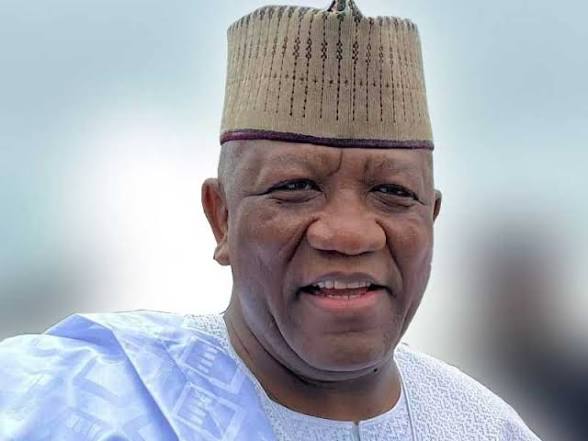
The company’s board chairman, Senator Abdulaziz Yari, said he had intervened personally with N6 billion to address the immediate obligation to bondholders, while blaming the company’s former majority owner, Femi Otedola, and former Chief Executive Officer, Akin Akinfemiwa, for the circumstances surrounding the default.
Yari stressed, however, that his intervention was not an admission of personal liability or an indication that the current board or management created the problem.

The development follows the December 2025 sale by Otedola of his controlling interest in Geregu Power to MA’AM Energy Limited for about $750 million. The transaction resulted in a change of ownership and the emergence of a new board chaired by Yari.
The bond at the centre of the dispute was issued in July 2022, before the ownership change. According to Faruk Yusuf, managing partner at Segun Suleiman & Co., who spoke on ARISE News, the bond was raised to finance the proposed acquisition of another power plant rather than Geregu’s working capital.
That acquisition subsequently failed to meet Bureau of Public Enterprises requirements. Yusuf said the proceeds were therefore expected to remain in an escrow or restricted account and earn interest, with the funds eventually available to meet the bond’s repayment obligations.

The issue became contentious after the change of ownership.
According to Yusuf, a review of Geregu’s books showed about N34 billion recorded as bond payable and roughly N31 billion in restricted cash. He alleged that documents exchanged during the ownership transition indicated that the restricted funds remained available to meet future debt obligations.
However, when the new owners sought to access the funds after a payment fell due on July 28, 2026, they were allegedly informed that the money was no longer available.
Yusuf alleged that the restricted funds had been utilised by the former owners before the company changed hands, raising questions about the representations made to the new owners during the transaction.
The allegations have yet to be independently established, and the parties blamed by Yari and Yusuf have not, in the account provided, publicly accepted responsibility for the alleged utilisation of the funds.
Importantly, the N40.09 billion figure represents the total value of the bond and not the amount that was immediately due. Yusuf said only about N6.026 billion was due as of July 28, comprising the scheduled repayment obligation, while Geregu had already made seven coupon payments and three principal repayments.
The failure to make the latest payment nevertheless triggered a significant deterioration in investor confidence.
Agusto & Co withdrew the ‘A’ credit rating previously assigned to Geregu Power and its Series 1 Senior Unsecured Bond, citing the default and saying it no longer had sufficient reliable information to maintain its rating opinion on the company and the instrument.
The rating withdrawal is particularly significant because credit ratings provide investors with an independent assessment of an issuer’s capacity to meet its financial obligations. The loss of the rating therefore adds another layer of uncertainty around Geregu’s debt profile and governance.
Yari said he had become personally involved because of the potential damage the dispute could cause to Geregu’s reputation and investor confidence.
He said his immediate funding was intended to protect bondholders and prevent the controversy from disrupting the company’s operations, while discussions continued with the former owners and management over responsibility for the underlying obligation.
The board chairman said the former owners and management had indicated their willingness to continue discussions towards a “full and fair accounting” of how the liability arose and how it should ultimately be resolved.
His preferred outcome, he said, was reimbursement of the funds he was advancing and a clear arrangement for Geregu’s future obligations to bondholders.
The controversy has also brought the due diligence process surrounding the $750 million ownership transaction into focus.
In a major acquisition, due diligence is expected to establish the financial position of the target company, including its assets, liabilities, contingent obligations and restricted cash. The allegation that a sizeable pool of cash intended to support debt repayment was represented as available during the transition, only to be subsequently found unavailable, could therefore have significant implications if established.
Yusuf acknowledged that no acquisition due-diligence exercise could guarantee that every problem would be discovered before completion. However, he said the circumstances surrounding the restricted funds warranted serious scrutiny.
The matter could also have implications beyond the immediate dispute between the old and new owners. Questions over the handling of restricted cash, representations made during the ownership transfer and the circumstances of the bond default potentially touch on broader issues of corporate governance, disclosure and investor protection.
Yusuf said regulatory processes were already under way and that relevant regulators were aware of the matter. He specifically referenced the Securities and Exchange Commission, the Central Bank of Nigeria and the Economic and Financial Crimes Commission.
For Geregu, the immediate challenge is to contain the damage to investor confidence while ensuring that the power generator’s operations remain unaffected by the dispute.
The company has sought to draw a line between the current management’s responsibility for running the business and obligations arising from arrangements made under the previous ownership. Yari said he was not involved in Geregu’s day-to-day management but remained committed to ensuring that the company’s obligations were honoured.
The dispute is consequently evolving into more than a bond repayment problem. It has become a test of how effectively liabilities and restricted assets were transferred in a major corporate transaction, the quality of due diligence undertaken by the new owners, and the accountability of the former owners for financial arrangements entered into before the sale.
For bondholders, the immediate concern is whether scheduled payments will be made. For shareholders, the bigger question is whether the controversy will have lasting consequences for Geregu’s finances, reputation and governance.
Yari’s N6 billion intervention may provide immediate relief, but it does not resolve the underlying dispute. The ultimate resolution will depend on establishing what happened to the restricted funds, who was responsible for their alleged utilisation and whether the former and current owners can reach an agreement that protects investors and restores confidence in one of Nigeria’s prominent privately owned power generation companies.