
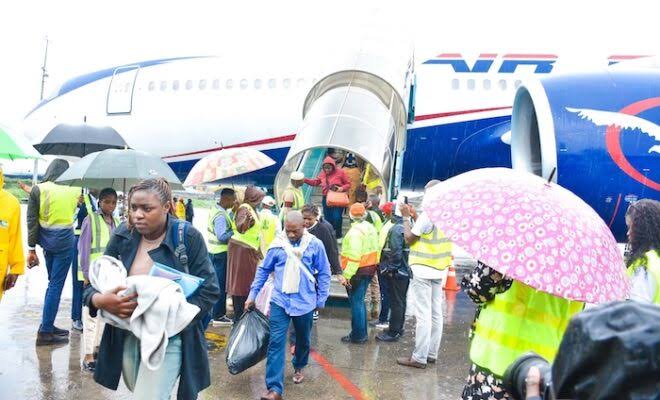

Nigeria’s domestic aviation industry recorded 4,765 flight delays in August 2026, representing almost 60 per cent of the 7,961 domestic flights operated during the month, according to data from the Nigeria Civil Aviation Authority.

The NCAA’s Summary of Domestic Airline Flight Disruption Operations for August 2026 also recorded 36 cancellations, highlighting the continuing operational challenges confronting the industry.
The figures mean that roughly six out of every 10 domestic flights recorded a delay of at least 16 minutes.

Also 642 flights were delayed for two hours or longer, comprising 407 flights delayed between two and three hours and 235 delayed for three hours or more.
The NCAA recorded 2,801 delays of between 16 minutes and one hour, while another 1,322 flights were delayed between one and two hours.

Air Peace, United Nigeria account for 48% of delays
Air Peace recorded the largest number of delayed flights during the month, with 1,330 delays out of 1,864 flights, representing a delay rate of about 71.4 per cent.
United Nigeria Airlines recorded 943 delays from 1,231 flights, giving it an even higher delay rate of approximately 76.6 per cent.
Combined, the two airlines accounted for 2,273 delays, or almost 48 per cent of all delayed flights recorded by the NCAA.
United Nigeria also recorded eight cancellations, the highest among the airlines in the NCAA report, while Air Peace recorded seven.
Enugu Air recorded 582 delays from 878 flights, representing about 66.3 per cent, while Arik recorded 188 delays from 301 flights.
Value Jet recorded 435 delays from 767 flights; Max Air, 204 from 336; Ibom Air, 254 from 560; and Rano Air, 216 from 503.
Aero recorded 246 delays from 469 flights, while Overland Airways recorded 139 delays from 239 operations.
Fuel crisis compounds operational problems
The latest figures come amid persistent concerns over the cost and availability of aviation fuel, aircraft maintenance and foreign exchange.
The Airline Operators of Nigeria has repeatedly warned that soaring Jet A1 prices are threatening the viability of domestic operations.
In April, AON described rising aviation fuel prices as “astronomical and artificial”, warning that “airline revenues are insufficient to cover the cost of fuel alone.”
The operators subsequently threatened to suspend flights over the fuel crisis before the Federal Government intervened.
The industry’s cost pressures extend beyond fuel. Nigerian carriers depend heavily on imported aircraft spare parts and overseas maintenance facilities, making foreign-exchange availability and the naira exchange rate important components of their operating costs.
Airlines have consequently cited technical faults, aircraft rotation, crew constraints, adverse weather, air-traffic restrictions and fuel availability among the factors responsible for flight disruptions.
Safety concerns
The operational problems have also raised concerns about crew fatigue.
The National Association of Aircraft Pilots and Engineers has warned that prolonged disruption and extended crew duty periods could have safety implications.
NAAPE President, Captain Bunmi Gindeh, said: “Fatigue impairs cognitive function and erodes situational awareness, a pilot’s or an engineer’s most essential tool.”
He added: “The safety of every passenger is placed at measurable risk when crew members are compelled to operate under these conditions.”
Passengers bear the cost
Travellers have repeatedly complained about long periods spent at airports without reliable information, refreshments or clear indications of when their flights will eventually depart.
The problem has also exposed the gap between Nigeria’s passenger-protection regulations and their implementation.
The NCAA’s passenger-rights framework provides for compensation in qualifying cases involving delays and cancellations, as well as other forms of assistance depending on the circumstances and duration of the disruption.
The regulations require airlines to provide passengers with information about delays and, after specified periods, provide assistance including refreshments and communication.
Qualifying passengers may also be entitled to reimbursement, accommodation and compensation.
The challenge has been ensuring that those rights are actually delivered.
Passengers often have to make repeated complaints to airlines and, where unresolved, approach the regulator.
NCAA intensifies pressure on airlines
The NCAA has recently increased its scrutiny of airline operations and passenger-rights compliance.
The regulator has ordered United Nigeria Airlines to improve its operations and comply with passenger-protection requirements following concerns over its service performance.
The intervention comes against the backdrop of the airline’s 76.6 per cent delay rate in August.
Industry stakeholders say the regulator should publish regular airline-by-airline data covering not only delays and cancellations but also the reasons for disruptions, complaints received, compensation paid and sanctions imposed.
Such information would enable passengers to make more informed choices and place commercial pressure on airlines with consistently poor punctuality.