

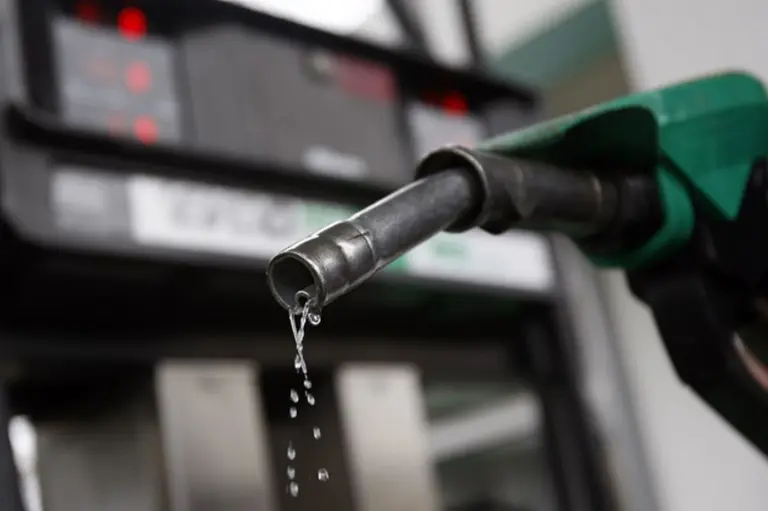
Opposition political leaders have dismissed the Federal Government’s 30-day petrol discount as a token gesture, arguing that the reported N60-per-litre cut offers little relief to Nigerians paying up to N1,400 per litre, against N185 before subsidy removal in May 2023.
Former Vice-President Atiku Abubakar, the Obidient Movement, the Nigeria Democratic Congress and the presidential campaign organisation of Oyo State Governor Seyi Makinde faulted the intervention, questioning its impact, sustainability and timing ahead of the 2027 general elections.
The opposition leaders said the intervention, including a proposed N1,350-per-litre ceiling on petrol’s landing cost, offered little relief to Nigerians struggling with soaring transport fares, food prices and business expenses.

Makinde’s campaign organisation described the reported N60-per-litre discount as insignificant, arguing that it barely addressed the increases that have pushed petrol prices from about N185 per litre before subsidy removal in May 2023 to around N1,400 currently.
Atiku questioned the sustainability of the intervention, asking what would happen when the 30-day period expires, while the Obidient Movement argued that years of economic hardship could not be erased by a temporary discount.

The criticism followed Thursday’s announcement by the Minister of Finance and Coordinating Minister of the Economy, Taiwo Oyedele, that the Nigerian National Petroleum Company Limited would temporarily forgo its retail profit margin and sell petrol at its landing cost, with priority given to public transport operators.
The Presidency said the arrangement was not a return to the petrol subsidy regime but part of measures to cushion households against global oil price shocks.
However, a comparison with petrol prices before subsidy removal and a year ago shows that the intervention is designed more to moderate price fluctuations than to restore affordability.
At about N185 per litre before subsidy removal, buying 40 litres of petrol cost N7,400. At the current benchmark of N1,400 per litre, the same quantity costs N56,000 which is an increase of N48,600.
Even at the proposed N1,350-per-litre landing-cost ceiling, 40 litres would cost N54,000, more than seven times the pre-subsidy cost. The ceiling also applies to the ex-gantry or landing cost, not necessarily the final retail price at every filling station.
The National Bureau of Statistics’ October 2025 data put the average petrol price at N1,052.31 per litre. At N1,400, the current benchmark is about 33 per cent higher than that figure, underlining the limited scale of the proposed relief.
The government has yet to specify the final discount per litre. Oyedele said the amount could be more or less than N60, depending on NNPC’s operating costs and margins.
The offer is also limited to NNPC retail outlets for 30 days, raising questions about how many motorists will benefit and whether transport operators will pass the savings on to passengers.
Other countries cut fuel taxes
The Newsmatrics reports that Nigeria’s approach contrasts with interventions adopted by some countries to reduce the immediate cost of fuel during periods of rising global energy prices.
Poland cut value-added tax on fuel from 23 per cent to eight per cent and reduced excise duties, alongside maximum retail prices. Kenya reduced fuel VAT from 16 per cent to eight per cent for an initial 90-day period, while Ghana introduced a temporary petrol subsidy and additional subsidised public transport services.
Such measures directly reduce some of the taxes or costs feeding into pump prices, although their fiscal implications and effectiveness vary.
In Nigeria, the government says it has waived more than N3.3tn in petrol taxes and duties between January and September 2026. It has also announced plans to expand cash transfers, subsidised credit and compressed natural gas adoption, which it says can provide cheaper alternatives to petrol.
The administration maintains that a return to blanket subsidy would place unsustainable pressure on public finances and revive problems associated with the previous system, including smuggling and fuel scarcity.
Oyedele said subsidy removal had released N15.8tn to the Federation Account between June 2023 and December 2025.
But the cited savings have not, by themselves, demonstrated that households are receiving relief commensurate with the increase in the cost of living.
Experts demand transparency
Energy experts have warned that the petrol discount could become another form of subsidy if NNPC sells below its economic cost and later seeks reimbursement from the government or accumulates liabilities ultimately borne by taxpayers.
Professor Wumi Iledare, an emeritus professor of petroleum economics, said the intervention could be justified if it was temporary, targeted and transparent, with savings passed on to commuters.
He urged the government to disclose the discount per litre, the volume of petrol covered, the funding arrangements and the maximum potential cost to public finances.
PetroleumPrice.ng Chief Executive Officer, Jeremiah Olatide, welcomed the intervention but argued that the proposed N1,350 landing-cost ceiling was too high, advocating a reduction to N1,000 per litre.
The government says the ceiling is intended to smooth price fluctuations rather than suppress market prices. Under the proposed arrangement, refiners and importers would absorb costs above the threshold and recover them when market conditions improve.
Minister of State for Petroleum Resources (Oil), Heineken Lokpobiri, defended deregulation, arguing that market-based pricing had encouraged investment in domestic refining, including the Dangote Refinery.
For consumers, however, the immediate concern remains the price at the pump. Unless the intervention translates into substantial reductions in retail prices or transport fares, the 30-day discount may provide only limited respite from the burden of fuel costs.