

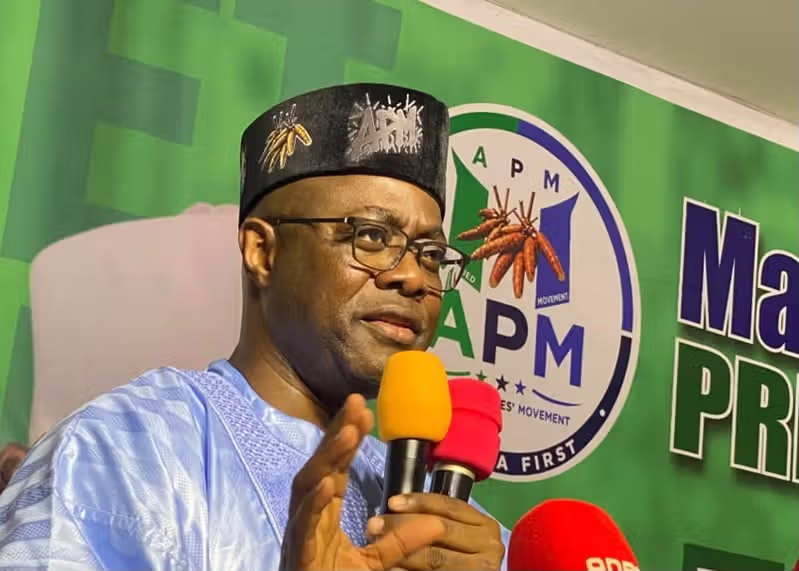

The Allied Peoples Movement (APM) presidential campaign council says Seyi Makinde, its candidate, will defeat President Bola Tinubu in 12 states in the 2027 elections.

In a statement issued on Saturday, Richard Ihediwa, director of strategic communications of the APM campaign council, said Makinde’s RESET NIGERIA message was gaining traction across the country and would undermine Tinubu’s chances in the election.
Ihediwa listed Oyo, Kaduna, Rivers, Plateau, Borno, Enugu, Bauchi, Sokoto, Delta, Kano, Adamawa and Lagos as the 12 states where the All Progressives Congress (APC) said Tinubu would be present for his campaign rallies.

He said the move reflected concerns over Makinde’s growing political foothold.
“We are confident that Engr. Seyi Makinde will defeat President Bola Tinubu in the 12 battleground states identified by the President, as well as in other states across the federation, in the January 2027 presidential election,” the statement reads.

“No amount of political manoeuvring, intimidation or abuse of incumbency by the President’s associates can stop the growing support for the APM candidate and his Reset Nigeria Agenda.
“We challenge President Tinubu to visit Plateau, Kaduna, Kano and other states by road to witness firsthand the deplorable state of federal highways, the hardship faced by Nigerians and the widespread infrastructural decay across the country.”
The APM campaign council spokesperson accused the Tinubu administration of spending the country’s treasury on wasteful projects and programmes while Nigerians grapple with economic hardship.
He said Makinde’s RESET NIGERIA programme offers a more practical alternative, centred on an inclusive, four-year transitional government of national unity, with education, the economy, security and socio-political reforms as its four priority areas.
Ihediwa said the economic plan would tackle poverty by increasing production, adding that the security strategy would combine intelligence gathering, social reorientation, and kinetic and non-kinetic measures.
He said the education component would expand access to quality, functional education, while institutional reforms would promote inclusive governance and responsible leadership.