


A diplomat infected with the Bundibugyo strain of Ebola has deteriorated into multi-organ failure in Abuja as authorities intensify contact tracing and emergency preparedness nationwide.

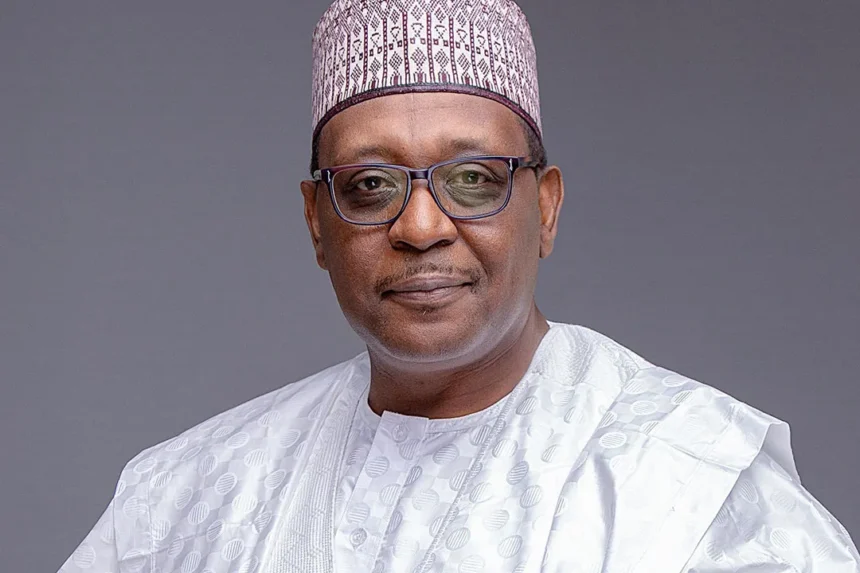
Health minster, Ali Pate has urged Nigerians not to panic assured that efforts was in full gear to contain the outbreak.
The Director of Public Health Laboratory Service at the Nigeria Centre for Disease Control and Prevention, Olajumoke Babatunde, disclosed the patient’s deteriorating condition at an emergency meeting of the agency in Abuja on Wednesday.

The identity and nationality of the patient have not been disclosed.
The identity and nationality of the patient have not been disclosed.

Babatunde said three rounds of molecular testing confirmed the Bundibugyo strain, which is also responsible for the ongoing outbreak in the Democratic Republic of Congo.
“The patient’s condition has deteriorated. We did three levels of tests, but all were molecular. The strain was Bundibugyo,” she said.
The development comes as state governments step up surveillance and monitor people who may have been exposed to the virus, following the Federal Government’s confirmation of Nigeria’s first reported case in the current outbreak on Tuesday.
The patient, a woman who recently arrived on an international flight from Uganda, had reportedly spent several days at a private hospital in the Federal Capital Territory before the infection was confirmed.
In Anambra State, authorities said they had followed up 40 persons of interest as of October 20. Of these, 33 had completed their monitoring period and been cleared, while seven remained under active follow-up.
Niger State has activated emergency operations and is completing an isolation centre, while Ogun State is tracing 111 persons of interest.
The NCDC has activated its incident-management response, focusing on case management, enhanced surveillance, contact tracing, infection prevention and control, and public communication.
Despite the patient’s deteriorating condition, the Coordinating Minister of Health and Social Welfare, Prof. Muhammad Pate, on Wednesday urged Nigerians to remain vigilant without succumbing to panic.
Speaking to State House correspondents after meeting the Chief of Staff to the President, Femi Gbajabiamila, at the Presidential Villa, Abuja, Pate said the government was collaborating with Uganda and working to prevent further transmission.
“All I can tell you is that we are collaborating with our sister African nation of Uganda.
“What is important is that we have found this one case.
“We are doing contact tracing, and we are putting containment measures to ensure that it doesn’t go into our population,” he said.
Pate said Nigeria had the public health institutions and experience needed to manage the situation, recalling the country’s successful response to the 2014 Ebola outbreak.
“The Federal Government has competent authorities to deal with this. We have done it in 2014, and we have good public health institutions. Nigerians should be reassured.
“We must be vigilant, but not panic. People should respect public health information from trusted sources and not spread misinformation and false rumours,” he added.
The minister said the NCDC was working round the clock and that the Presidential Task Force on Ebola was active. He promised regular updates as more information became available.
He described the Abuja infection as an imported case, noting that the outbreak had persisted for months without a reported case in Nigeria before the current detection.
“It’s one case. It’s an imported case, and we are containing it,” he said.
However, Pate stressed that the success of the response would depend partly on public compliance with health directives, including isolation requirements.
He warned that authorities could not effectively contain the disease if people instructed to isolate themselves ignored the directives and visited public places such as markets.
The minister also disclosed that a review of Nigeria’s Ebola response plan was under way, following President Bola Tinubu’s directive at a National Security Council meeting on October 15.
He said coordination between public health authorities, the Office of the National Security Adviser and the presidential task force had strengthened the country’s preparedness.
The government was expected to meet again on Thursday to review developments.
The World Health Organisation identified the infection as the Bundibugyo strain, a rare member of the Ebola virus group first identified during an outbreak in Uganda in 2007.
The virus can spread through direct contact with the blood and other bodily fluids of an infected person or contaminated materials. It is not ordinarily transmitted through casual contact with someone who is not showing symptoms.
The WHO declared the outbreak in the Democratic Republic of Congo and Uganda a public health emergency of international concern on May 16.
According to WHO figures cited by Newsweek, the DRC had recorded 9,066 confirmed cases and 4,381 deaths as of October 11. Kenya also confirmed an imported case this month, according to Al Jazeera.
There is currently no approved vaccine or specific treatment for Bundibugyo virus disease, making early detection, isolation, supportive medical care and effective contact tracing critical to controlling its spread.
In anticipation of the outbreak reaching Nigeria, Tinubu established a presidential task force chaired by Gbajabiamila on June 9 and approved N10bn for emergency preparedness.
The measures included tighter airport screening, QR-code health declarations for passengers arriving from high-risk countries and isolation facilities at the Lagos and Abuja airports.
At the task force’s inauguration on June 18, Gbajabiamila said Nigeria had not recorded a case at the time, stressing the need to prevent a recurrence of the circumstances surrounding the country’s previous Ebola outbreak.