

The move could open up a new front in the country’s growing aviation sector and deepen ties with China, the world’s second-largest economy.
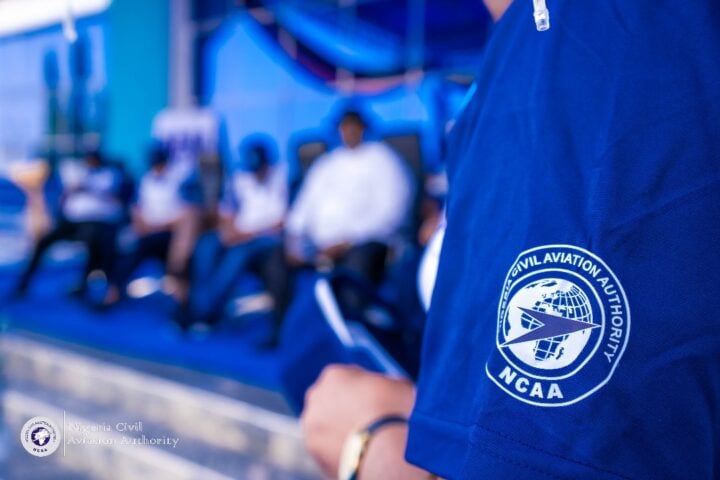
The Nigeria Civil Aviation Authority (Nigeria Civil Aviation Authority) has temporarily suspended enforcement of its “no pay, no service” directive against 11 domestic airlines over unpaid statutory remittances owed to the regulator.
The suspension was announced in a statement signed by Capt. Chris Najomo, Director-General of Civil Aviation, on Sunday.

The development followed an earlier internal directive that had placed the affected operators on an updated compliance list and ordered the withdrawal of regulatory and administrative services until outstanding obligations were resolved.
The NCAA said the suspended enforcement action was originally introduced to strengthen compliance with statutory remittances collected by airlines on behalf of aviation agencies.

It explained that the measure was designed to compel defaulting operators to either settle outstanding obligations or agree structured repayment plans.
“The Nigeria Civil Aviation Authority wishes to inform stakeholders in the aviation industry that the previously communicated enforcement of the ‘no pay, no service’ directive in respect of certain airlines with outstanding statutory remittances has been temporarily suspended,” the statement read.
According to the Authority, the decision to suspend enforcement followed extensive consultations within the aviation sector and a review of prevailing operating conditions, particularly the rising cost of aviation fuel and its impact on airline sustainability.
The Authority stressed that the suspension did not amount to a waiver of debts, noting that all outstanding obligations remain valid and enforceable.
It also clarified that the statutory charges involved, including the 5% Ticket Sales Charge and Cargo Sales Charge, are collected by airlines on behalf of the regulator and do not form part of airline operating revenue.
It added that these funds are used to support safety oversight, personnel training, and economic regulation across Nigeria’s aviation ecosystem, with distribution across key regulatory agencies responsible for maintaining industry standards.
The controversy stems from an internal memo dated May 22, 2026, which directed all NCAA directorates to suspend services to 11 domestic airlines over unpaid statutory remittances.
The memo placed the affected operators on an updated “No-Pay-No-Service” list and instructed departments to withhold regulatory and administrative services until the airlines cleared their debts or obtained financial clearance from the Directorate of Finance and Accounts.
At the centre of the dispute are the 5% Ticket Sales Charge and Cargo Sales Charge, statutory funds collected by airlines on behalf of the NCAA to support safety oversight, personnel training, and economic regulation in the aviation sector.
The directive, signed by the Director of Finance and Accounts, Olufemi Odukoya, was circulated across regional offices and copied to senior officials, including the Director-General of Civil Aviation.
Airlines affected by the earlier order include Air Peace Limited, Ibom Air Limited, Arik Air Limited, United Nigeria Airlines, Max Air Limited, Caverton Helicopters, Overland Airways, Rano Air, ValueJet, NG Eagle and Umza Air.
The memo further stated that no directorate was to render services to any listed airline without financial clearance, a move that tightened regulatory pressure and raised concerns over possible disruptions to flight operations.
What you should know
President Bola Ahmed Tinubu (Bola Ahmed Tinubu) had in April 2026 approved a 30% relief on statutory fees owed by Nigerian airlines to aviation agencies to cushion the impact of rising Jet A1 fuel costs.
The relief covers obligations to agencies such as the Federal Airports Authority of Nigeria (Federal Airports Authority of Nigeria) and the Nigerian Airspace Management Agency (Nigerian Airspace Management Agency), alongside other regulatory charges within the sector.
The government said the measure was expected to improve airline liquidity and reduce the risk of operational disruptions.
In addition, the Nigerian Midstream and Downstream Petroleum Regulatory Authority (Nigerian Midstream and Downstream Petroleum Regulatory Authority) introduced indicative pricing for aviation fuel, while airlines were also granted a 30-day credit window for Jet A1 purchases as part of broader stabilisation measures.