

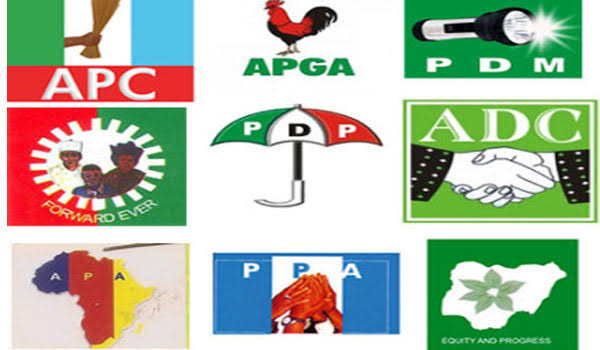

Barely a week after political parties concluded their primaries for the 2027 general elections, uncertainty, intrigue and mounting legal threats have enveloped the nation’s political landscape as major parties continue to withhold their final lists of candidates.

The prolonged silence from party headquarters has triggered widespread anxiety among hundreds of aspirants who emerged from fiercely contested primaries but are yet to receive formal confirmation that their victories will stand. Across the political spectrum, candidates who celebrated triumphs at collation centres now find themselves in limbo, uncertain whether their names will eventually appear on the lists to be submitted to the Independent National Electoral Commission (INEC).
The delay comes against the backdrop of the May 30 deadline fixed by INEC for political parties to conclude their primaries and resolve disputes arising from them. While the Electoral Act grants parties additional time to submit candidates’ names, the continued withholding of final results has fuelled suspicions that intense behind-the-scenes negotiations, appeals, substitutions and power plays are still underway.

From the ruling All Progressives Congress (APC) to the Nigeria Democratic Congress (NDC), African Democratic Congress (ADC), Peoples Democratic Party (PDP) and other parties, the atmosphere is increasingly tense as aspirants await the final verdict of party leaderships.
For many politicians, the fear is not unfounded. Several party leaders have openly suggested that declarations made at primary election collation centres may not necessarily represent the final outcome.

APC National Chairman, Prof. Nentawe Yilwatda, heightened such concerns when he insisted that only the party leadership would determine the final outcome of the exercise. Following a flood of petitions from aggrieved aspirants, he stated that only the APC national secretariat would release the final list after a comprehensive review process.
Similarly, Senate President Godswill Akpabio stirred speculation when he assured senators who lost their primaries that “it was not the end of the matter,” a statement widely interpreted as evidence that efforts were still ongoing to accommodate some disappointed aspirants.
The flurry of consultations at the highest levels of government has further heightened intrigue. Akpabio’s meeting with President Bola Tinubu and a separate meeting involving House of Representatives leaders and the President have been linked to attempts to manage the fallout from contentious primaries and prevent an exodus of aggrieved politicians.
Indeed, the scale of post-primary disputes appears unprecedented. Across states such as Nasarawa, Bauchi, Kwara, Delta, Kogi and Oyo, allegations of manipulated figures, irregularities and candidate imposition have generated a torrent of petitions and threats of litigation.
The APC itself admits that appeals arising from the primaries are at the heart of the delay. A party source disclosed that reports submitted by various appeal committees are still being evaluated and that recommendations would subsequently be forwarded to the National Working Committee for final action.
“Any moment from now, once the NWC concludes its work. We still have ample time to submit the list to INEC,” the source said, while insisting that President Tinubu was already intervening to resolve some of the disputes.
The situation has already produced casualties. Former Deputy Senate President Ovie Omo-Agege and former Inspector-General of Police Mohammed Adamu are among prominent figures who have dumped the APC after alleging irregularities in the conduct of the primaries.
Political observers say the turmoil reflects the unintended consequences of the direct primary system adopted by many parties this year. Unlike previous election cycles dominated by delegate-based contests, direct primaries involved significantly larger numbers of party members, creating logistical challenges and expanding the scope for disputes.
Consensus arrangements, promoted by party leaders as a conflict-management tool, proved equally controversial. Many aspirants accused party leaders of disguising imposition as consensus, leading to resistance, defections and litigation threats.
What is particularly unsettling for aspirants is the growing belief that some parties are deliberately delaying the publication of results to create room for political bargaining and last-minute adjustments.
Within the APC, there are reports that efforts are ongoing to reconcile competing interests arising from promises allegedly made to defecting opposition governors and influential stakeholders. Such arrangements are said to have complicated the process of finalising candidate lists.
The NDC is grappling with similar tensions. Although winners were declared at various primary centres, the party leadership insists that only its National Executive Committee can formally announce the final candidates.
A source familiar with deliberations within the party revealed that the final list might even be sent directly to INEC before being made public.
“INEC will publish the names of the candidates after submission by the party, and candidates can check the commission’s website. This is aimed at avoiding a crisis at a time when tensions remain high,” the source said.
The unease within the NDC became visible during a recent NEC meeting where FCT senatorial aspirant Aisha Yesufu reportedly challenged party leaders over the conduct of the primaries before discussions moved behind closed doors.
Apparently sensing the danger, NDC National Leader Seriake Dickson acknowledged widespread grievances among aspirants. “Some aspirants felt that they had been cheated and are relying on the party leadership to give them justice,” he said, while unveiling plans for a post-primary reconciliation programme.
NDC Chairman Moses Cleopas Zuwoghe was even more direct about the stakes involved. “If they do not feel that they were fairly treated, it would be a serious problem for the parties,” he warned.
Although parties are not violating any law by withholding candidate lists, the delay has intensified questions about transparency and internal democracy. Section 29 of the Electoral Act 2026 allows parties up to 120 days before the election to submit candidates who emerged from valid primaries. The law does not compel immediate publication of names after primaries.
Political scientist Kabiru Sa’id Sufi believes parties are struggling to cope with the complexities generated by direct primaries and consensus arrangements.
“It has never been like this,” he observed. “This is the first time we are having direct primaries, which is suited with an option of either conducting the direct primaries or having a consensus.”
According to him, parties are still trying to “tidy up things with regard to either the consensus or the direct primaries,” while also consulting governors and other stakeholders before ratifying outcomes.
However, every additional day of delay deepens uncertainty and raises the stakes. Aspirants who believe they have been short-changed are already weighing legal action, while others are openly considering defections.
The greatest danger may not be the delay itself but what it reveals about the fragility of internal party democracy. If candidates declared winners at primaries can still be subjected to prolonged negotiations and elite bargaining after the official conclusion of contests, questions will inevitably arise about the sanctity of the electoral process.