

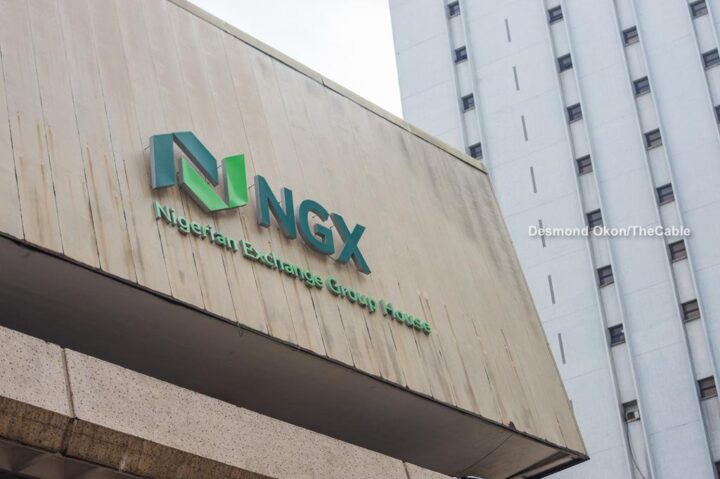

Nigerian stocks are down by over N5 trillion since June 1 as profit-taking gains momentum on the NGX.

The market capitalisation had pushed through a mind-blowing N160 + trillion at the end of May.
Equity returns, at the close of May, had seen more than N60 trillion gained YtD, which translated to a YtD return of over 60 per cent.

A N5 trillion drop in a N160 trillion+ market cap is a correction that looks negligible, which is a normal healthy breath for an overheated market.
The All-Share Index (ASI) has spent a lot of time in deep overbought territory on the RSI, often sitting above 75 or even 80 after big rallies in major banks and industrial giants like Dangote Cement, MTN Nigeria, BUA, and Seplat Energy.

However, NGX data sudden panics—what some call panic selloffs tend to be often contained. It’s usually sector-specific shocks or quick bouts of profit-taking in blue-chip stocks, not a sign of an economic collapse.
There are still strong macro forces at work that are holding the market up and a broader shift in its structure, even with tough challenges like stubborn inflation and a weakened naira.
The local equity market is still up by N120 trillion under this present political administration. Nigerian banking industry has seen a record inflow of liquidity.
The Central Bank of Nigeria (CBN) has really shaken things up by forcing Nigerian banks to raise their minimum capital. Investors are paying close attention—there’s a rush of restructuring, fresh money flowing into major banks, and hardly any panic selling.
Nigerian pension funds loved fixed-income assets like government bonds. But with inflation eating returns, those safe bets aren’t so safe anymore. So, big local asset managers and pension funds have changed gears, pouring over N1.4 trillion into stocks to shield themselves from the naira losing value.
This steady stream of domestic cash supports the market, making long-term crashes less likely. Big names in consumer goods, telecoms, and giants like Dangote Cement and BUA Cement have handled things well and know how to adapt.
The market trades around a 13.6x Price-to-Earnings (P/E) ratio, higher than its three-year average of 9.5x. Investors are clearly betting on solid growth in the years ahead.
Even with this optimism, there are some big risks on the horizon. The CBN gets aggressive and jacks up interest rates to tame inflation; fixed-income returns could suddenly look a whole lot better.
That would tempt money back to bonds, draining cash from equities, and triggering a sharp correction. There’s also the issue of dilution—if banks or big companies’ issue lots of new shares to meet new capital rules or clean up their balance sheets, that could water down existing shareholders’ stakes. Investors need to watch these warning signs closely, or they could get caught off guard.
According to Nairametrics, the technical outlook suggests a 240,000- 242,000 index psychological zon3 which ties directly into the main structural breakdown zone from late April.
If the profits take the ASI into this zone, watch volume expansion. A bounce here supports the overall macro uptrend while a clear break under implies the correction has further room to travel.
Investors are advised to monitor volume closely on these days: drops of 1% on falling/waning volume mean sellers are getting fatigued. Consecutive days of multi-trillion naira declines, accompanied by increasing volume (which we saw on the heavy selling of large-cap industrials) signal that the institutional rotation is incomplete.
Nairametrics