

Andy Burnham has become the United Kingdom’s new Prime Minister after King Charles III formally invited him to form a government following the resignation of Keir Starmer, ending weeks of political uncertainty within the governing Labour Party.

Burnham, who won the Labour Party leadership last week after serving as Mayor of Greater Manchester, becomes Britain’s seventh prime minister in a decade, inheriting a government facing economic headwinds, pressure over public services and growing demands for improved living standards.
Starmer officially resigned on Monday, travelling to Buckingham Palace to tender his resignation to the King after announcing outside 10 Downing Street that his tenure had come to an end.
“Today I am here to offer my resignation and close the book on my time as prime minister,” Starmer said. “I thank the British people for the opportunity to serve. I now pass the baton to Andy Burnham and wish him every success.”
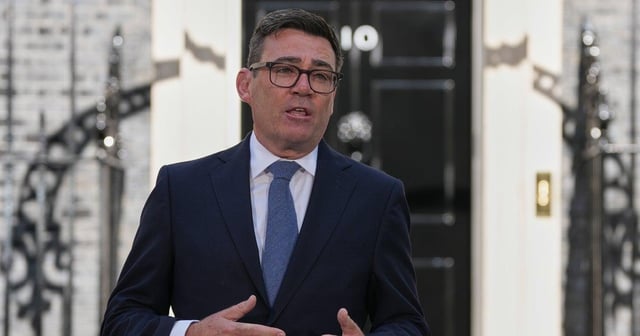
Shortly afterwards, Burnham met King Charles III, who asked him to form a new government in keeping with Britain’s constitutional tradition. The new prime minister then returned to Downing Street, where he pledged to restore stability and chart a fresh course for the country.

“We must regain our stability,” Burnham said in his first address, describing his administration as a “circuit-breaker” that would deliver a new political and economic direction.
His emergence marks a dramatic political turnaround for Labour, which swept to power with a landslide victory in the 2024 general election but has since struggled with declining public support and internal divisions.
Starmer announced in June that he would resign following mounting criticism from within his party after Labour reportedly suffered heavy losses in the May local elections, where it lost more than 1,000 council seats. The disappointing results fuelled calls for a change in leadership despite the party’s commanding parliamentary majority.
Burnham entered the Labour leadership race as the overwhelming favourite, securing the backing of 379 of Labour’s 403 Members of Parliament before emerging unopposed as the party’s new leader.

A veteran Labour politician, Burnham previously served in several Cabinet positions under former Prime Ministers Gordon Brown and Tony Blair before becoming the inaugural Mayor of Greater Manchester in 2017. During his time as mayor, he won national recognition for championing greater devolution, affordable housing, improved transport and stronger social welfare policies.
Political analysts say his experience in local government and reputation as a pragmatic reformer helped build broad support within Labour at a time when the party was searching for a fresh direction.
The new prime minister has outlined an ambitious domestic agenda focused on reviving economic growth, tackling the rising cost of living, creating more jobs for young people and improving public services.
He has also pledged to reduce homelessness, support the re-industrialisation of Britain, expand the powers of local authorities and return key public services to greater public control as part of a wider constitutional reform programme.
Burnham’s appointment comes at a challenging period for the UK economy. Although inflation has eased significantly from the double-digit levels recorded in 2022 and 2023, many households continue to grapple with high living costs, while sluggish economic growth, strained public finances and pressure on the National Health Service remain major concerns.
His government will also face difficult decisions on tax, public spending, immigration, housing and the UK’s long-term economic competitiveness.
Internationally, Burnham is expected to maintain Britain’s support for Ukraine, strengthen ties with European partners while preserving post-Brexit trade arrangements, and deepen strategic relations with allies including the United States and Commonwealth countries.
With the leadership transition now complete, attention will shift to Burnham’s Cabinet appointments and the policy measures his administration will unveil in the coming weeks as it seeks to restore public confidence and consolidate Labour’s hold on power ahead of the next general election.
This version adds historical and political background, explains Britain’s constitutional process, profiles Burnham’s career, and provides context on the economic and political challenges facing his new administration while maintaining a balanced, news-agency style.