

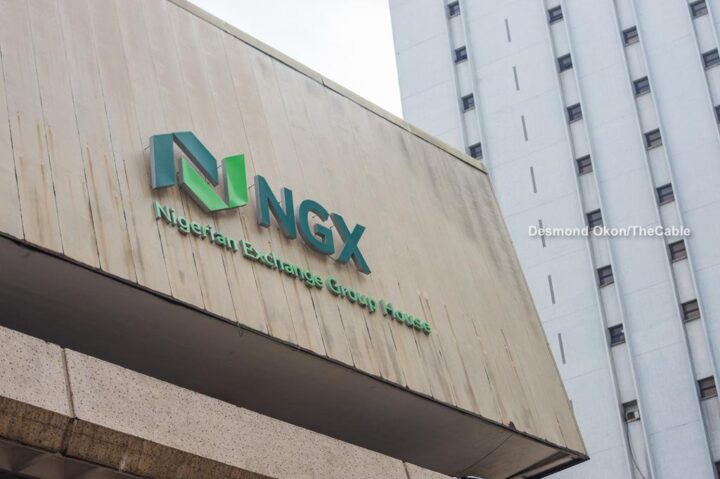
The Nigerian Exchange Group has intensified efforts to secure Nigeria’s long-awaited reclassification into the FTSE Russell Frontier Market Index, dispatching a high-level delegation to London to engage directly with FTSE Russell officials, global institutional investors and international custodian banks over concerns that temporarily stalled the country’s planned inclusion.
The NewsMatrics reports that the move underscores the strategic importance of the FTSE decision for Nigeria’s capital market, which has been one of the world’s best-performing equity markets since 2024, driven by sweeping economic reforms, record corporate earnings, renewed domestic investor participation and improving foreign investor sentiment.
The delegation met with FTSE Russell representatives this week to address concerns arising from Nigeria’s adoption of the T+1 settlement cycle, which took effect on June 1, 2026, making the country the first African market to migrate from the traditional T+2 settlement system.

The engagement followed FTSE Russell’s decision on June 30 to pause Nigeria’s planned reclassification, despite announcing in March that the country would be upgraded to Frontier Market status effective September 2026.
According to NGX Group, discussions focused on demonstrating that the T+1 framework was the product of extensive market-wide consultations before implementation, has operated without systemic disruption since its launch, and can accommodate additional measures to resolve concerns over trade prefunding requirements for foreign investors without reversing the settlement reform.
The Exchange argued that the issues raised largely relate to operational arrangements for international investors rather than any structural weakness in Nigeria’s market infrastructure. It said improvements in custody processes and foreign exchange settlement mechanisms could adequately address the remaining concerns.

FTSE Russell is expected to communicate its final decision by the end of August.
A successful reclassification would represent a major milestone for Nigeria’s capital market.
Once admitted into the FTSE Frontier Market Index, Nigeria would become eligible for automatic allocations from global index-tracking funds, pension funds, sovereign wealth funds and other institutional investors that benchmark their portfolios against FTSE indices.
Market analysts believe this could significantly increase foreign portfolio inflows, improve liquidity, deepen price discovery and enhance Nigeria’s visibility among global investors after years of subdued foreign participation caused by exchange rate distortions and foreign exchange repatriation challenges.
The renewed optimism surrounding the FTSE review comes against the backdrop of an extraordinary rally in Nigerian equities over the past two and a half years.
Following the economic reforms introduced by President Bola Tinubu’s administration in 2023—including the removal of petrol subsidies, exchange rate liberalisation and broader macroeconomic reforms—the Nigerian stock market emerged as one of the strongest-performing exchanges globally.
The NGX All-Share Index surged by more than 45 per cent in 2024 after recording an exceptional gain in 2023, pushing the market capitalisation above the N100 trillion mark for the first time in history.
The rally was powered by strong performances from banking, industrial, telecommunications and consumer goods stocks, as investors sought protection against high inflation and currency depreciation.
The Nigerian Exchange has built on its remarkable 2025 performance with an even stronger rally in 2026. The benchmark NGX All-Share Index gained about 45.9 per cent in 2025 to close at 155,613.03 points, while total market capitalisation climbed to N99.38 trillion, reflecting strong investor confidence fuelled by banking recapitalisation, robust corporate earnings and macroeconomic reforms.
The bullish momentum has accelerated in 2026. As of July 17, 2026, the All-Share Index had surged to 242,977.83 points, representing a year-to-date gain of more than 56 per cent, while market capitalisation expanded from N99.38 trillion at the start of the year to M156.74 trillion, adding over N57 trillion in shareholder value in just over six months.
The stellar performance has placed the NGX among the world’s best-performing equity markets in 2026, supported by strong corporate fundamentals, increased domestic institutional participation and improving foreign investor confidence.
Banking stocks received additional support from the Central Bank of Nigeria’s banking sector recapitalisation programme, which triggered renewed investor interest in tier-one lenders and encouraged substantial capital raising across the industry.
The market has largely sustained its momentum into 2026, supported by resilient corporate earnings, improved transparency in the foreign exchange market and growing confidence that macroeconomic reforms are beginning to stabilise the economy despite lingering inflationary pressures.
Although foreign investors have gradually returned to the market, domestic institutional investors, particularly pension fund administrators and asset managers, have remained the dominant drivers of trading activity.
T+1 reform aims to modernise market
Nigeria’s migration to T+1 settlement forms part of broader efforts to align its capital market with evolving global standards.
Under the system, securities transactions are completed one business day after execution instead of two, reducing counterparty risk, improving capital efficiency and accelerating the recycling of liquidity within the market.
However, FTSE Russell indicated that the shorter settlement cycle could create operational challenges for international investors, particularly regarding foreign exchange funding and trade prefunding requirements.
NGX officials maintain that these issues are operational rather than structural and can be resolved through enhanced coordination among regulators, custodians, settlement banks and foreign exchange providers.
Market observers say the London engagement demonstrates Nigeria’s determination to preserve the credibility of its capital market reforms while ensuring that technical implementation issues do not derail one of its most significant opportunities to attract long-term international investment.
With FTSE Russell expected to announce its final position by the end of August, investors are watching closely. Approval of the reclassification could unlock billions of dollars in passive investment flows over time, further strengthening a market that has already established itself as one of Africa’s standout investment destinations since 2024.