

Let me confess frankly here: Nigeria’s 11 Electricity Distribution Companies (DisCos) have largely been vilified over their unimpressive services nationwide.

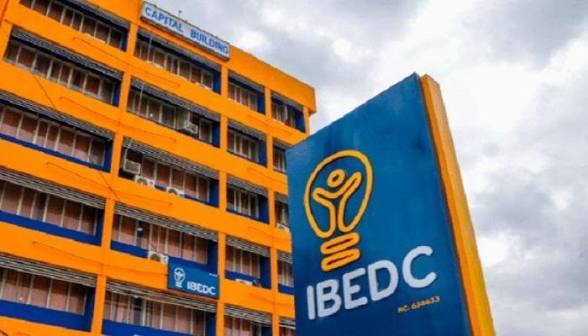
But from the Nigerian Electricity Regulatory Commission’s (NERC) Performance Index data, and my personal experience on the ground, it seems the Ibadan Electricity Distribution Company (IBEDC) stands out in this league of poor-performing DisCos.
Evidently, from Ibadan, Abeokuta, Ilorin, Oshogbo, Oyo to Ijebu-Ode, Sagamu and Sango-Ota, a common thread runs through what IBEDC truly represents.
Like the now-defunct National Electric Power Authority (NEPA), many residents have coined the same old acronym for NEPA — “Never Expect Power Always” — for IBEDC.

This sorry state of IBEDC’s sloppy services is evident in its obvious aloofness and indifference to the plight of residents in the four states — Oyo, Ogun, Osun and Kwara — which it superintends over.
On a daily basis, residents relive tales of woe about how their businesses have gone comatose following the absence of power for periods running into several weeks or months.
Even petty artisans — barbers, hairdressers, tailors, mechanics, etc. — have equally dumped their trades for lack of electricity and opted for menial jobs to eke out a living.
They justify their action on the grounds that their jobs rely primarily on electricity, which has become a luxury that is difficult to come by.

For instance, in the Sango-Ota, Ijoko axis of Ogun State, only those on what are referred to as 33 kVA lines enjoy a few hours of electricity, sometimes once in three or four days.
And for the unfortunate residents under the 11 kVA lines, they have been subjected to endless blackouts. Theirs is a case of a few minutes of a flash of light, followed by agonising weeks without electricity at all.
The unending and escapist tale one hears always is the same: “The transformer has broken down again.”
One asks: How come the transformer(s) cannot function for a full day unhindered by unexplained faults?
Oftentimes too, as is the common practice among the DisCos, when such unconvincing transformer faults occur, you see Community Development Association (CDA) executives swing into action by collecting “repair levies” to fix such malfunctioning facilities.
Otherwise, such communities will remain in darkness for only God knows how long.
And guess what? At month-end, the ubiquitous IBEDC workers invade such communities, harassing both postpaid and unmetered consumers to pay for power they seldom consume.
Of course, the haplessly cowed “consumers” are usually left with no option but to mop up some funds to avoid the wrath of these debt collectors.
Also, as some residents hinted recently, as far as IBEDC is concerned, its priority is to service its 33 kVA consumers optimally because they are its cash cow, rather than bother about the 11 kVA consumers who generate lean revenue for it. Such less-vital consumers are usually left unrepentantly to lick their wounds.
For instance, only a few days ago, power was restored to the Sango/Ijoko area for a few hours after a two-week blackout. But, judging from the feelers one got, the “honeymoon” is now over, and the no-power beat has, sadly, resumed.
Still, one has been wondering why a state like Ogun, with its large industrial/manufacturing hub, shouldn’t take advantage of the Electricity Act 2023 to unbundle the state from the suffocating grip of this underperforming electricity distribution firm.
The truth is that Ogun State needs to take the urgent lead in this direction to tap into the gains of powering its Sango-Ota, Agbara and Sagamu industrial/manufacturing hubs for greater economic prosperity.
Unless IBEDC improves its services, to continue to rely on its monopoly to power the state is like waiting for Godot — a forlorn hope!
One thinks that now is the time for Ogun State to bid a crawling power company a most welcome goodbye.
Emmanuel I. Nwagboniwe is a media practitioner.